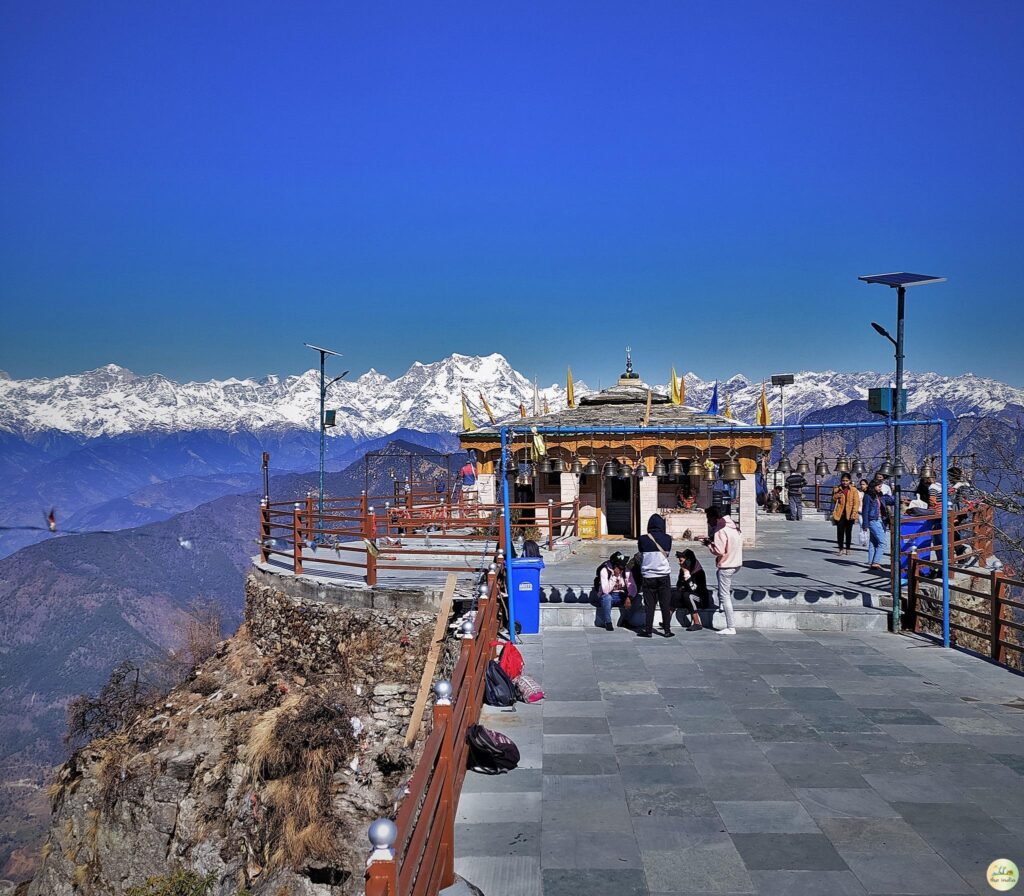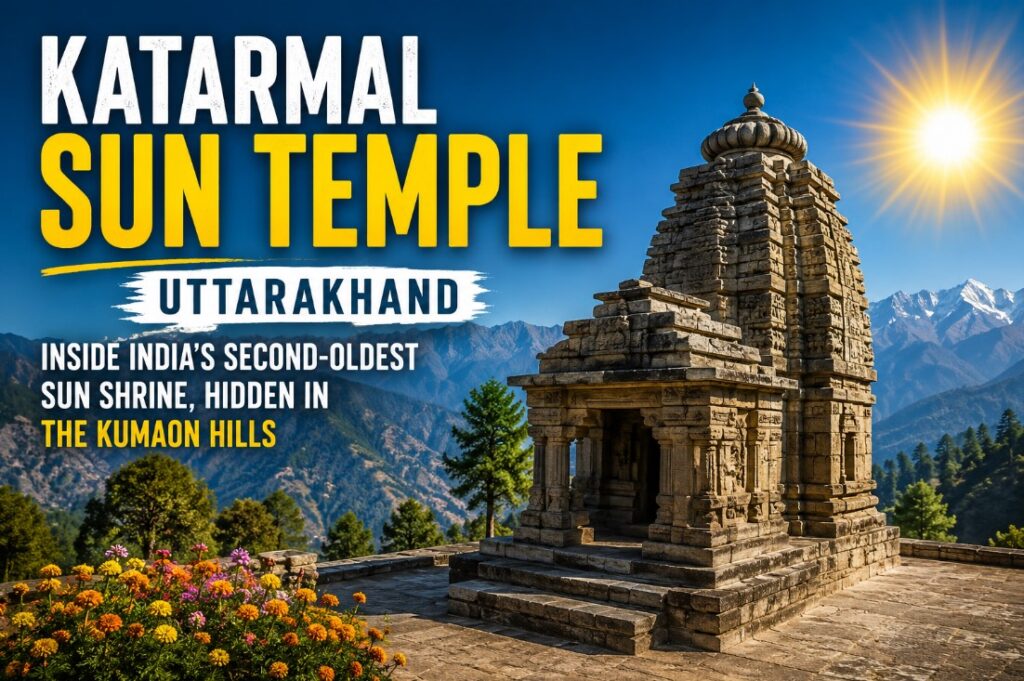
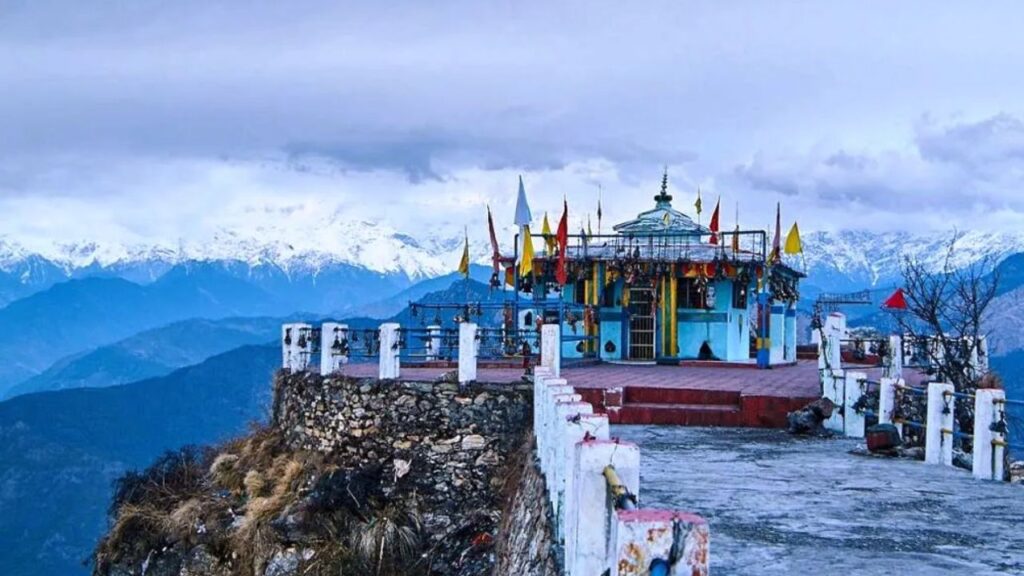
Stand on the ridge at Kartik Swami around 6 AM in October, and you’ll understand why trekkers keep coming back to a temple with no grand gopuram, no marble floors, and barely any crowd. Just wind, prayer bells strung along an iron fence, and a 360-degree wall of snow peaks that seems to close in from every direction. That’s the pull of this place – it doesn’t try to impress you with architecture. It does it with altitude and silence.
Kartik Swami Temple sits in the Rudraprayag district of Uttarakhand, dedicated to Lord Kartikeya (also called Skanda or Murugan), the elder son of Lord Shiva and Goddess Parvati. It’s one of the few major North Indian shrines built for a deity who’s far more commonly worshipped in South India. That contrast alone makes it worth a paragraph of its own, but the mythology behind it is where things get interesting.
The History Behind Kartik Swami Temple, Uttarakhand
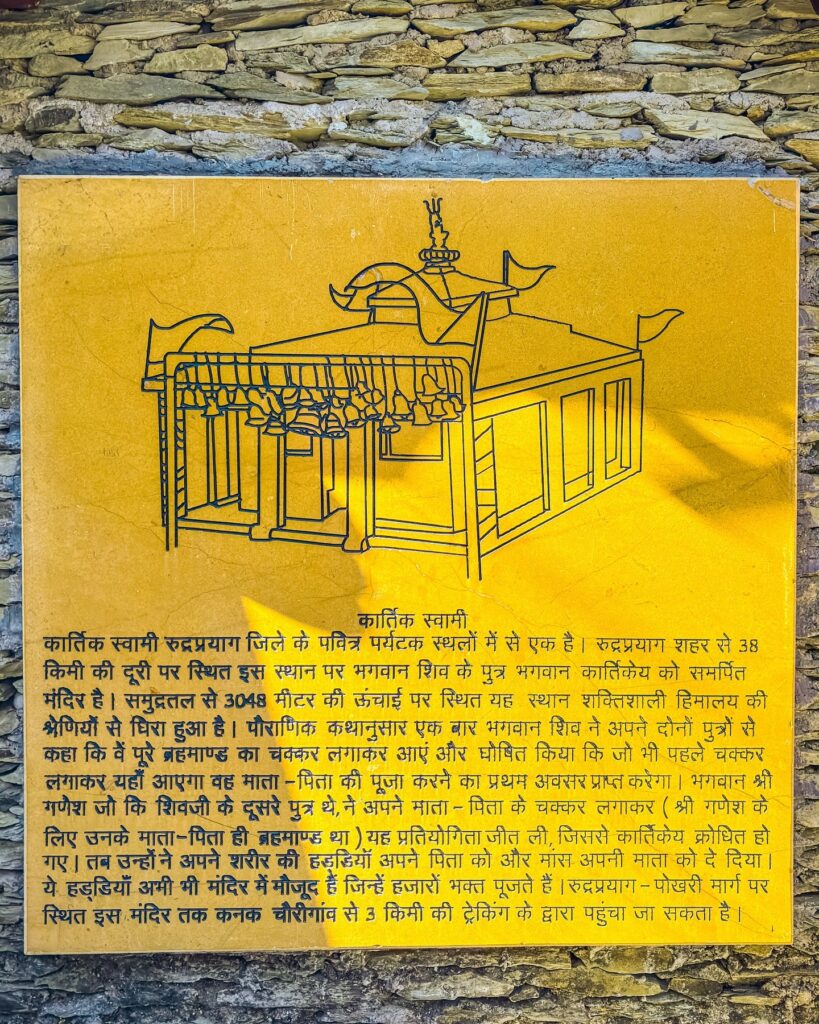
The story goes back to a family contest on Mount Kailash. Shiva asked his two sons, Ganesha and Kartikeya, to circle the universe – whoever finished first would receive a divine blessing. Kartikeya took the challenge literally and set off on his celestial vehicle. Ganesha, cleverer or lazier depending on who’s telling it, simply walked a circle around his parents and declared them his entire universe. Shiva was charmed by the logic and named Ganesha the winner.
Kartikeya, by most accounts, didn’t take the loss well. Versions of the legend diverge here – some say he stormed off to Kronch Parvat and meditated in grief; others claim he offered his own bones to his father as an act of renunciation, which is why the temple’s inner sanctum holds no traditional idol. Just a stone believed to represent his skeletal remains, worn smooth by centuries of touch and prayer. No statue, no ornamentation – and somehow that absence hits harder than a jewel-encrusted deity would.
Whichever version you believe, the site has been a pilgrimage point for a long time, and locals in the Garhwal region still treat Kartik Purnima (usually falling in October or November) as the temple’s biggest event of the year, with lamp-lighting and bhajans drawing thousands to Kanakchauri.
Kartik Swami Temple Location
The temple perches at roughly 3,050 meters (about 10,000 feet) atop Kronch Parvat, near Kanakchauri village in the Rudraprayag district of Garhwal, Uttarakhand. It falls within the boundary of the Kedarnath Wildlife Sanctuary, which explains the oak, rhododendron, and deodar forest cover you’ll walk through on the way up.
On a clear day – and clear days aren’t rare here – you can pick out Nanda Devi, Chaukhamba, Trishul, Bandarpunch, Neelkanth, and the Kedarnath Dome from the temple courtyard. That’s six major Himalayan peaks visible without moving your feet. Not many trek destinations in Uttarakhand offer that.
Kartik Swami Temple Uttarakhand Trek: Distance and Time
Here’s the part most people actually search for.
- Trek distance: About 3 km one way from Kanakchauri village, ending with a flight of roughly 380 stone steps near the top.
- Trek time: Around 1.5 to 2 hours going up, a bit less coming down. Some fitter trekkers do it in an hour flat, though that’s not the pace to plan around if you’re bringing kids or older family members.
- Difficulty: Easy to moderate. It’s not technical – no ropes, no scrambling – but the last stretch is steep enough that beginners will feel it in their calves.
Road access ends at Kanakchauri, about 40 km from Rudraprayag town (some sources list it as 38 km, depending on the exact route taken). From there, the trek is the only way in. No cable car, no shortcut, which is honestly part of the appeal.
If you’re coming from the Chopta or Kedarnath side instead of Rudraprayag, there’s an alternate approach via Chandrapuri, where you can pick up a shared jeep to Kanakchauri and start the same trail.
Read Also: Is Kartik Swami Temple Trek Difficult? A Complete Guide to Stairs, Distance, and Route
Kartik Swami Temple Uttarakhand Temperature and Best Time to Visit
Weather here shifts fast, and altitude makes a real difference – this is nearly 3,050 meters up, so pack accordingly regardless of season.
- Summer (April–June): Daytime temperatures generally sit between 10°C and 20°C. Pleasant for trekking, cooler at night than you’d expect.
- Monsoon (July–September): Averages dip below 18°C, with heavy rain and a real risk of landslides on the approach roads. Most guides advise skipping this window entirely.
- Winter (November–February): Temperatures can fall between 0°C and 15°C, with occasional snowfall right at the temple. Beautiful for photography, brutal if you’re unprepared.
As for today’s temperature at Kartik Swami – that’s not something a static guide can tell you accurately, since mountain weather changes by the hour. Check a live forecast for Rudraprayag or Kanakchauri the morning of your trip, and carry a layer even if the plains forecast looks warm. Locals will tell you the ridge wind alone can undercut whatever number your phone shows.
Most guides agree that March to June and September to November offer the best mix of visibility, safety, and comfort. October, specifically, tends to get singled out – clear skies, crisp air, and the post-monsoon green still on the hillsides.
Kartik Swami Temple Timings
The temple stays open through most of the year, though there’s no fixed gate-opening hour posted online in the way a city temple might have. Pilgrims generally aim to reach by mid-morning for darshan and try to time their descent before evening, since there’s no lighting on the trek trail after dark. The evening aarti, when the temple’s countless hanging bells ring together against a setting sun, is often described as the single most memorable moment of the visit – worth planning your day around if you can manage a same-day up-and-down before dusk.
How to Reach Kartik Swami Temple, Uttarakhand
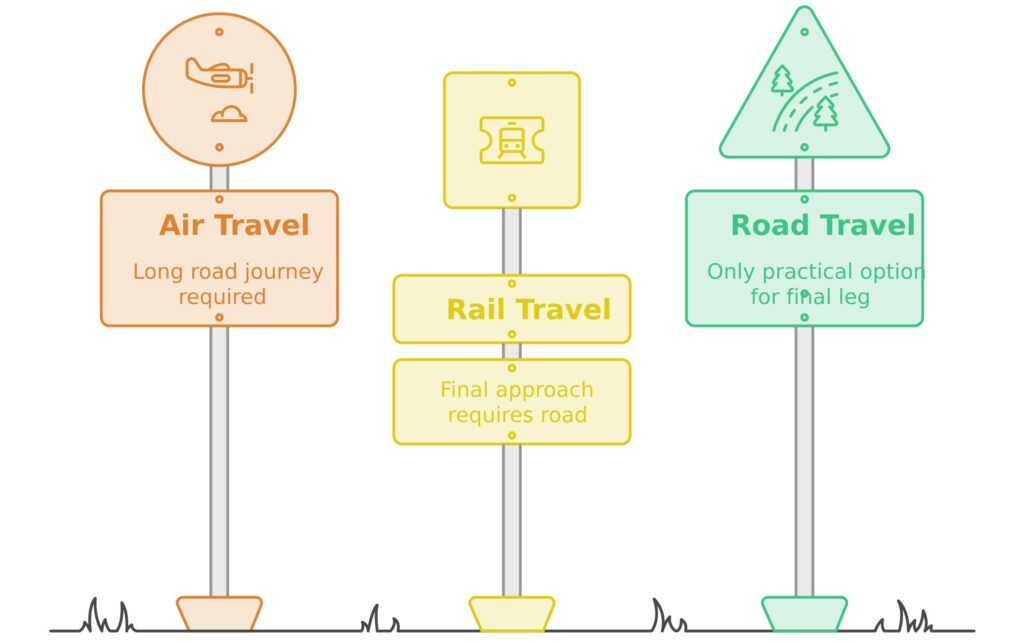
By Air: The nearest airport is Jolly Grant Airport in Dehradun, roughly 190–200 km from Kanakchauri. From there, it’s a road journey via Rishikesh and Devprayag to Rudraprayag.
By Rail: Rishikesh is the nearest major railhead, with Haridwar as a second option. Both connect well to Delhi and other North Indian cities by train.
By Road: This is really the only practical way to finish the trip, since the final approach has no rail or air option at all.
Distances to Kartik Swami Temple from Major Cities
| From | Approximate Distance |
| Delhi | 430–450 km |
| Dehradun | 210–220 km |
| Haridwar | 205–210 km |
| Rishikesh | 180–185 km |
| Nainital | 235–240 km |
Worth noting: these figures vary a bit source to source depending on the exact route (via Devprayag versus Srinagar Garhwal, for instance), so treat them as planning estimates rather than GPS-exact numbers.
Kartik Swami Temple to Kedarnath, Chopta, and Tungnath Distance
Since a lot of travelers combine this trip with the Kedarnath–Chopta–Tungnath circuit, here’s how the pieces fit together:
- Kartik Swami to Kedarnath: Roughly 90–98 km by road.
- Kartik Swami to Chopta: Around 75–80 km, about a 3-hour drive.
- Kartik Swami to Tungnath: Approximately 80–82 km – Tungnath itself requires its own trek once you reach the base at Chopta.
A fair number of trekkers actually string these four stops into one loop: Kartik Swami first for the sunrise views, then over to Chopta for a night, followed by the Tungnath–Chandrashila climb the next morning. It’s a demanding few days, but it covers some of the best high-altitude scenery in the Garhwal Himalayas without needing a Char Dham-length itinerary.
Practical Tips Before You Go
A few things that make the difference between a smooth trip and a frustrating one:
- Mobile network is weak to nonexistent past Kanakchauri – let someone know your plan before you start climbing.
- Carry your own water and snacks. Facilities thin out fast once you leave the village, and there’s no guarantee of shops along the trail.
- Sturdy trekking shoes matter more here than they might for other “easy” treks – the stone steps near the top get slippery when wet.
- If traveling with children, aim for kids above 10 with reasonable stamina; the step climb at the end catches younger ones off guard.
- Homestays and a small eco-lodge exist in Kanakchauri, which beats commuting back to Rudraprayag every evening if you’re staying more than a day.
Final Thought
Kartik Swami doesn’t compete with Kedarnath or Badrinath for scale, and it was never trying to. What it offers instead is something quieter – a short, honest trek that ends at one of the most complete mountain views in the Garhwal region, without the crowds that come with Uttarakhand’s bigger pilgrimage circuits. For anyone planning a Char Dham-adjacent trip, or just looking for a day trek that pays off disproportionately to the effort, it’s hard to find a better two-hour climb in the state.
This guide draws on travel routes, temperature data, and pilgrimage details compiled from multiple Uttarakhand tourism and trekking resources. Road distances and trek times are approximate and can shift with seasonal road conditions – always confirm current conditions locally before setting out, especially between June and September.
Travel Writer | Founder of Welcome Uttarakhand
Amit Negi has been exploring Uttarakhand’s temples, trekking routes, hill stations, and hidden villages for several years. Through Welcome Uttarakhand, he shares practical travel guides, local insights, and itinerary tips to help visitors plan memorable trips across the state.