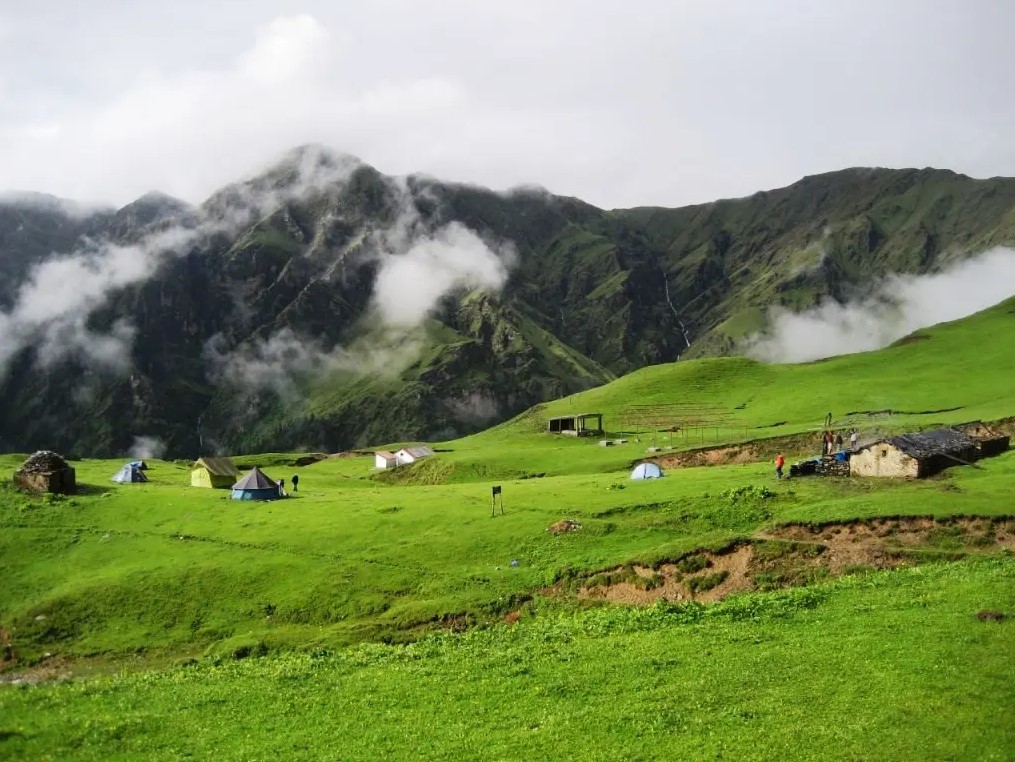
Picture this: a 3,658-metre-high meadow in the Garhwal Himalayas that’s buried under snow for eight months of the year, then explodes into more than 300 species of wildflowers for a few short weeks. That’s the Valley of Flowers in a nutshell – and it’s also why so many trekkers get the timing wrong.
Come in June and you’ll find snowmelt streams, dramatic peaks, and almost no flowers. Come in late September and the blooms have already faded to gold. There’s a narrow window in between where the valley genuinely looks like the postcards, and this guide exists to help readers hit it.
What Is the Best Time to Visit Valley of Flowers, Uttarakhand?
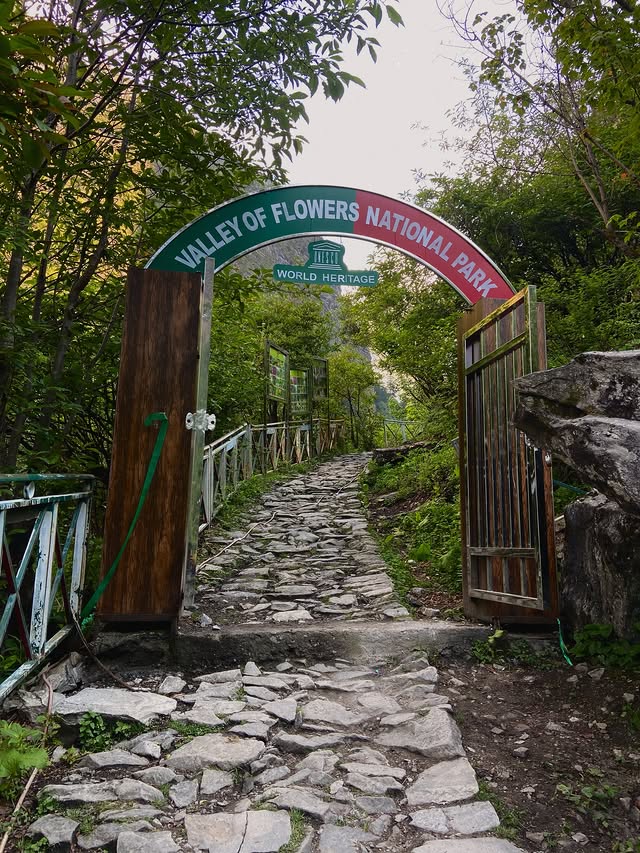
Short answer: mid-July to mid-August, with a slightly wider “good” window running July through September.
The park itself only opens for about four months a year. The Valley of Flowers National Park is usually open from June to September and remains closed from around October to May due to heavy snowfall and extreme Himalayan weather. Within that stretch, the flowering isn’t evenly spread – it follows the monsoon, not the calendar.
| Source | Peak Bloom Window Cited |
| Manchala Mushafir | Mid-July to mid-August |
| eUttaranchal | Peak floral season, July–August |
| FootLoose Dev (on-ground account) | 15th July to 15th August |
So if there’s one date range to circle, it’s roughly July 15 to August 15. Here’s the kicker though: monsoon arrival shifts year to year, so treat that window as a strong guideline, not a locked-in promise.
A quick month-by-month cheat sheet, for readers who want the fuller picture:
- June – the valley emerges from its winter closing period and snow melts; weather is pleasant and dry, with clear skies and sunny days, and it’s considered the most stable month for trekking. Don’t expect many flowers yet.
- July – rains begin, early bloomers like the Ladies Slipper Orchid appear, and by mid-month the display is picking up speed.
- Late July–mid-August – the sweet spot. Maximum flower density, maximum crowds, maximum rain.
- September – the trail dries out, views of surrounding peaks are sharper than at any other time in the open season, and golden grasses start replacing the flower carpets – a different but genuinely photogenic look.
- October – the park’s last month open; flowers are mostly gone and the first snow can arrive before closing.
One honest caveat: nobody, including the forest department, nails these dates with certainty months in advance. Opening and closing dates are tentative based on the previous year’s schedule, and the Uttarakhand government makes the final call based on weather, safety, and accessibility. Check closer to your travel date rather than booking blind a year out.
Is Valley of Flowers a Difficult Trek?
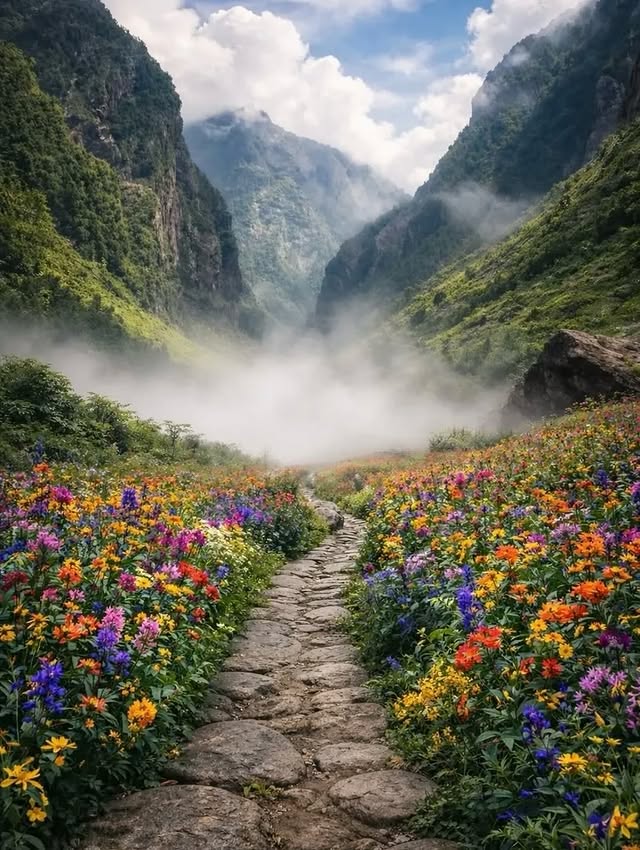
Not really – and that surprises people who assume anything in the high Himalayas must be brutal.
Most descriptions land somewhere between easy and moderate. The Valley of Flowers is generally rated an easy to moderate trek, and multiple operators echo that. The final stretch from Ghangaria into the park itself is only 7.5 km round trip, takes about two hours one way, and is rated easy, climbing from roughly 3,049 metres at Ghangaria to 3,658 metres inside the valley.
The part that actually tests people is earlier in the journey – the approach walk from Govindghat (or Pulna) up to Ghangaria. That stretch runs about 13–14 km, mostly on a well-maintained path with tea shops along the way, though the final few kilometres get steeper.
So no, this isn’t a technical mountaineering route. It is, however, a proper multi-hour walk at altitude, and that combination – long distance, thinning air, unpredictable rain – is what trips up trekkers who show up expecting a casual stroll. Reasonable fitness and a bit of prep walking beforehand go a long way.
Is There Snowfall in Valley of Flowers?
Yes, but timed very differently depending on the season, and it’s worth knowing which kind you might encounter.
Outside the open season – from November through February – the valley sits well below freezing, and the flowerbeds disappear under a thick blanket of snow that turns the whole landscape white and brown. Nobody treks there then; it’s genuinely dangerous and the park is shut regardless.
During the open months, snow shows up mainly at the edges of the season. Early June can still carry leftover winter snow and melting glaciers feeding the streams. And right before closing in October, the first snowfall of the season often arrives, right after the terrain has already turned from green to yellow to ochre. So a trekker visiting the July–August peak window is very unlikely to see snowfall inside the valley itself – though the surrounding peaks stay snow-capped year-round, which is part of what makes the scenery so striking.
How Many Days Are Enough for Valley of Flowers?
Plan for four to six days total, door to door, not counting how you get to the region in the first place.
A fairly typical breakdown looks like this:
- Day 1 – Travel to Govindghat or Joshimath.
- Day 2 – Trek from Govindghat/Pulna to Ghangaria (roughly 13–14 km).
- Day 3 – Ghangaria into the Valley of Flowers and back – a day trip, since overnight stays inside the park aren’t allowed.
- Day 4 – Trek back down to Govindghat, then onward travel.
One trek blogger’s full itinerary, including Rishikesh at both ends, ran four days minimum, and that lines up with what most operators quote. Add a fifth day if you’re also visiting Hemkund Sahib, and a sixth as a weather buffer – because monsoon rain can and does delay treks by a day here and there. Rushing this trip to three days is possible but tight, and it leaves almost no room for bad weather or an off day.
Can I Trek Alone in Valley of Flowers?
Yes. Independent trekking is permitted – visitors obtain their own permit at Ghangaria and can trek at their own pace.
That said, solo doesn’t mean unsupported. Practical realities worth knowing before going it alone:
- A local guide adds real value for identifying rare flower species, navigating trail conditions during monsoon, and managing altitude-related issues, even though one isn’t legally required.
- There’s no mobile network inside the valley or at Ghangaria – the last reliable signal is back at Govindghat, with BSNL and Airtel working in Joshimath.
- Entry is restricted to daytime hours and to the group of people who registered that morning, so solo trekkers still check in at a forest checkpoint like everyone else.
Solo travel here is genuinely common, especially among photographers and backpackers. Just don’t confuse “no permit partner required” with “no planning required.” The isolation from mobile networks is the detail that catches first-timers out.
Can We Do Valley of Flowers Trek in 3 Days?
Technically, yes – but it’s a sprint, and it only works with tight logistics and good weather luck.
A compressed 3-day version usually looks like: Day 1 drive to Govindghat and trek straight to Ghangaria; Day 2 visit the valley and trek back down to Govindghat; Day 3 travel out. That’s back-to-back long trekking days with almost zero buffer.
The honesty check here: this plan collapses the moment there’s a landslide, a heavy rain delay, or anyone in the group struggling with altitude. Some trekkers do attempt the Ghangaria-to-valley and back-down-to-Govindghat legs on the same day, but it’s not generally advised, since it’s a long walk and eats most of the daylight. If three days is all the time available, it’s doable for a fit, weather-lucky trekker – just go in knowing there’s no slack in the schedule.
Can Valley of Flowers Be Done in One Day?
From Ghangaria, yes – that’s actually the standard way it’s done, since nobody is allowed to sleep inside the park itself. No camping is allowed inside Valley of Flowers National Park, and there’s no accommodation inside it either, so it’s a day trip from Ghangaria and back, with most people starting early morning and returning in the late evening.
But if the question means “can I see the Valley of Flowers in a single day starting from Badrinath or Govindghat” – that’s a much harder ask. Technically it’s possible to visit the Valley of Flowers in one day from Badrinath by taking an early taxi to Govindghat, trekking to Ghangaria, then to the valley, and returning the same evening – but it’s described as very tiring rather than genuinely recommended. Realistically, budget at least one overnight stay in Ghangaria to do the valley justice, rather than treating it as a single marathon day.
Is Valley of Flowers Crowded?
During peak bloom, yes – moderately, and the park now actively manages it. Only 300 visitors are permitted daily, a cap enforced since 2017 specifically to protect the park’s fragile ecosystem.
That cap changes the crowding calculus compared to most Indian tourist spots – it’s a hard ceiling, not an estimate. Peak days in late July and August can still fill that quota, especially weekends, so early booking and an early morning start matter. Shoulder months tell a different story: late September sees fewer Hemkund Sahib pilgrims too, which makes the trail noticeably less congested, and June carries a similar off-peak calm, just with far fewer flowers to show for it.
Worth noting: even at full capacity, 300 people spread across an 87.5-square-kilometre park doesn’t feel like a crowd once inside – it’s the Ghangaria base camp and the approach trail where congestion actually shows up, particularly during peak season weekends.
How Far Is the Valley of Flowers from Badrinath?
This is one of those questions where sources genuinely disagree, so here’s the honest comparison instead of a single confident number:
| Source | Distance Cited |
| Manchala Mushafir | Approx. 40–42 km, combining road travel to Govindghat and a 17 km trek |
| Renok Adventures | 25 km trek distance is quoted from Badrinath, versus 18 km from Govindghat |
| eUttaranchal (distance chart) | 39 km by road to Badrinath from the Valley of Flowers area |
| Valleyofflowers.ind.in | 45 km |
The discrepancy mostly comes down to what’s being measured – straight road distance versus road-plus-trek combined, and whether the count starts at the temple, at Govindghat, or at Ghangaria. What’s consistent across every source: the road journey from Badrinath to Govindghat itself is a fairly steady 25 km, taking around 1.5 hours, and from Govindghat, the trek to Ghangaria and then the valley adds another 17–18 km on foot. So budget roughly an hour and a half of driving plus most of a day’s trekking to cover the full distance – the exact kilometre figure matters less than that time and effort split.
The Bottom Line
If there’s only room to remember one thing from all this: aim for mid-July through mid-August for the flowers themselves, book Ghangaria accommodation ahead of that window, and build in at least four to five days total so a rain delay doesn’t wreck the trip. Everything else – the crowd cap, the trek difficulty, the distance from Badrinath – is manageable detail once the timing is locked in.
And if peak bloom crowds aren’t appealing? September quietly rewards patient travelers with clearer peaks and a valley that’s earned its rest.
Frequently Asked Questions
What is the best time to visit Valley of Flowers, Uttarakhand?
Mid-July to mid-August, when the bloom is at its densest. July through September is the broader good-weather window.
Is Valley of Flowers a difficult trek?
No – it’s rated easy to moderate. The valley itself is a short, gentle 7.5 km round trip from Ghangaria; the longer approach walk to Ghangaria is what takes the real effort.
Is there snowfall in Valley of Flowers?
Not during peak season (July–August). Snow shows up at the edges of the open window – leftover winter snow in early June, and the first fresh snowfall as the park nears its October closing.
How many days are enough for Valley of Flowers?
Four to six days total, including travel to and from Ghangaria. Three days is possible but leaves no buffer for weather delays.
Can I trek alone in Valley of Flowers?
Yes, independent trekking is allowed with a self-obtained permit from Ghangaria. A guide isn’t required but helps with species identification and monsoon trail conditions.
Can we do Valley of Flowers trek in 3 days?
Yes, but it’s tightly scheduled with back-to-back long trekking days and no room for delays.
Can Valley of Flowers be done in one day?
Yes, as a day trip from Ghangaria – that’s the standard format, since no accommodation or camping is allowed inside the park.
Is Valley of Flowers crowded?
Moderately during peak bloom, but capped at 300 visitors a day since 2017. June and late September are noticeably quieter.
How far is the Valley of Flowers from Badrinath?
Sources vary between 25 and 45 km depending on what’s measured. The consistent figures: about 25 km of road from Badrinath to Govindghat, plus a 17–18 km trek from there to the valley.
How this guide was researched
This piece draws on official Uttarakhand tourism and forest department notifications on opening and closing dates, established regional trekking guides and tour operators, and on-ground trekker accounts describing trail conditions, timing, and distances first-hand. Where sources gave conflicting figures – particularly for the Badrinath distance – both figures are shown rather than picking one to sound more authoritative.

Travel Writer | Founder of Welcome Uttarakhand
Amit Negi has been exploring Uttarakhand’s temples, trekking routes, hill stations, and hidden villages for several years. Through Welcome Uttarakhand, he shares practical travel guides, local insights, and itinerary tips to help visitors plan memorable trips across the state.