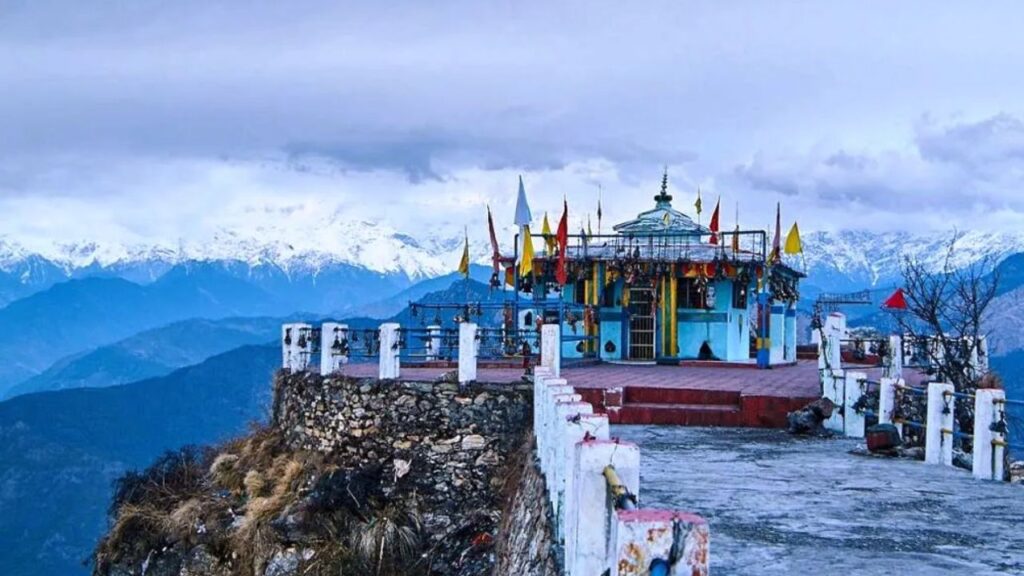
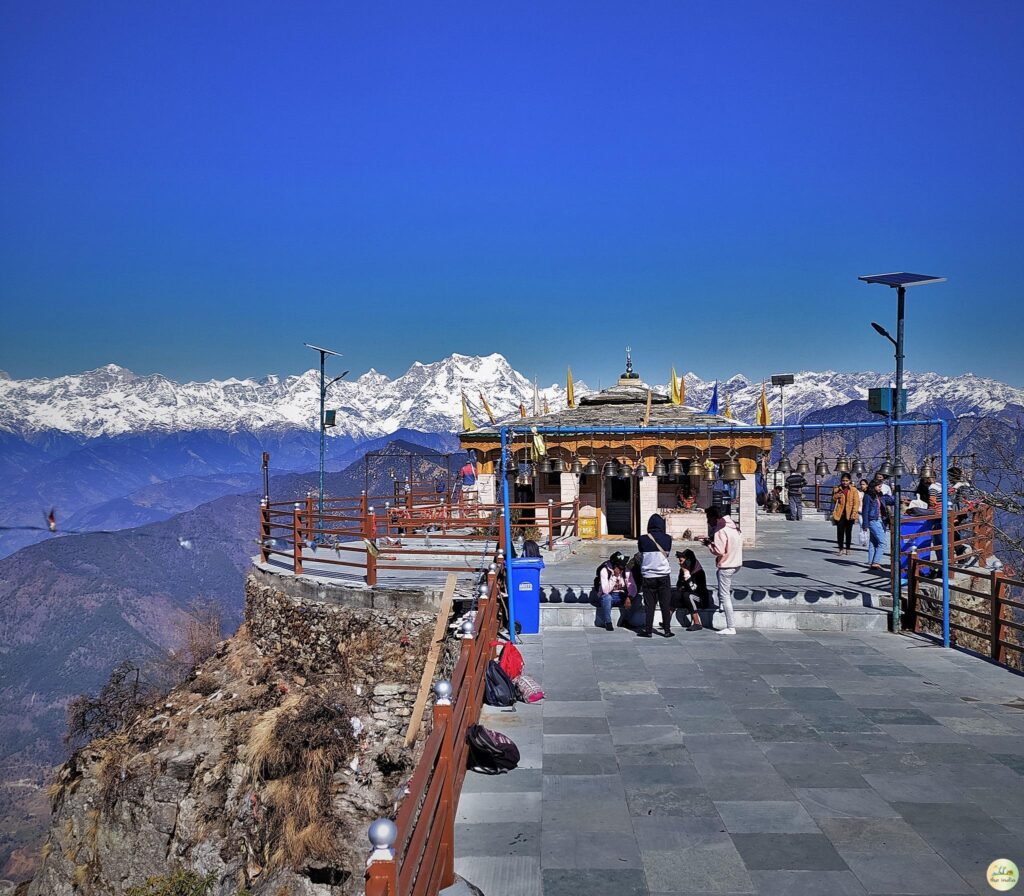
Three kilometres. That’s the entire trek length between Kanakchauri village and the bell-covered ridge where Kartik Swami Temple sits. Sounds short, right? It is. And yet trekkers still show up gasping halfway through, wondering why a “short walk” is making their calves burn.
Here’s the honest answer: the Kartik Swami Temple trek is not hard in the way a Himalayan expedition is hard. But it isn’t a stroll either. The author has cross-checked route data, elevation figures, and on-ground trekker accounts to put together this guide – covering exactly what makes the trail tricky, how many stairs you’ll actually climb, and every practical detail from village names to railway stations.
Is Kartik Swami Temple Trek Difficult?
Short answer: easy-to-moderate. Long answer: it depends on which kilometre you’re on.
The first two kilometres are gentle. A dirt-and-stone path winds through oak and rhododendron forest with a steady, manageable incline – the kind of grade a first-time trekker can handle without much trouble. Families do it. Kids do it. So do people who haven’t trekked in years.
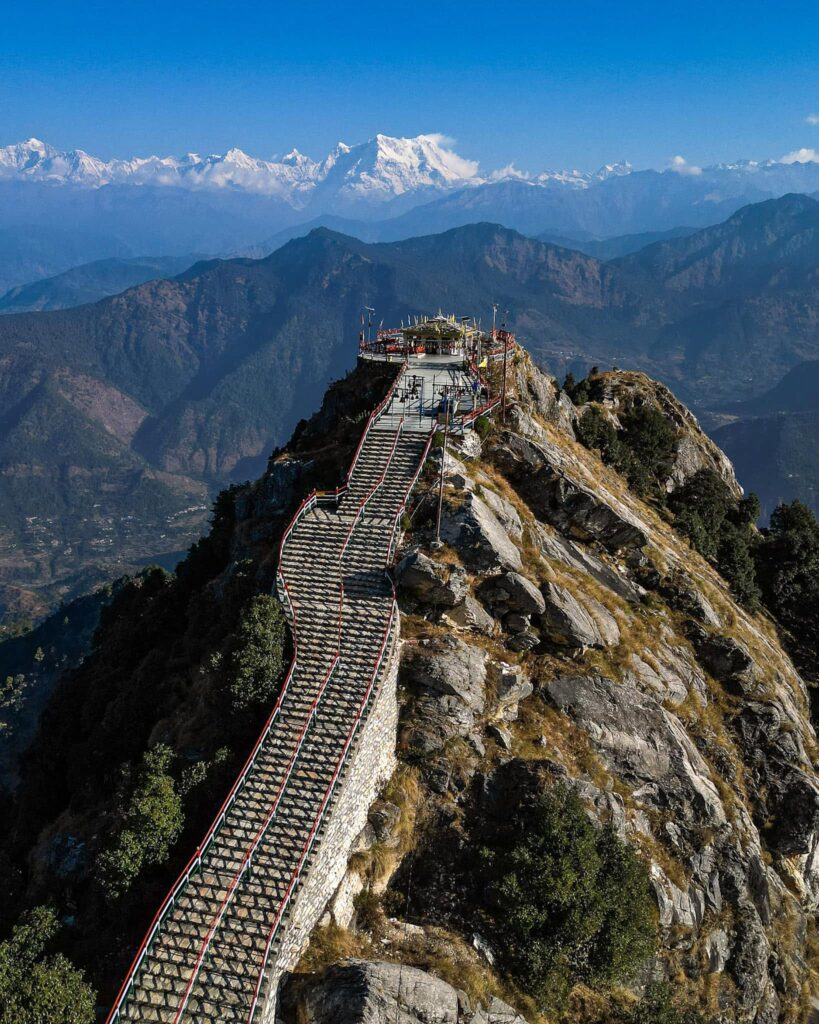
Then the trail changes character. The final stretch – roughly the last 500 metres to a kilometre – turns into a steep staircase carved into a narrow ridge, with valleys dropping away on both sides. That’s where the “easy” label starts to feel generous. Thinner air, tired legs, and a staircase with no flat breaks make this final push the real test.
So no, you don’t need mountaineering experience. But you do need functioning knees, a bit of stamina, and – if you’re prone to vertigo – a steady head, since the ridge-top stairs have exposure on either side. Trekkers with knee problems are often advised to think twice, and groups are recommended over solo attempts partly because the surrounding forest has reported bear activity.
Read Also: Kartik Swami Temple Uttarakhand: History, Trek & Distance Guide
How Many Stairs Are in Kartik Swami Temple?
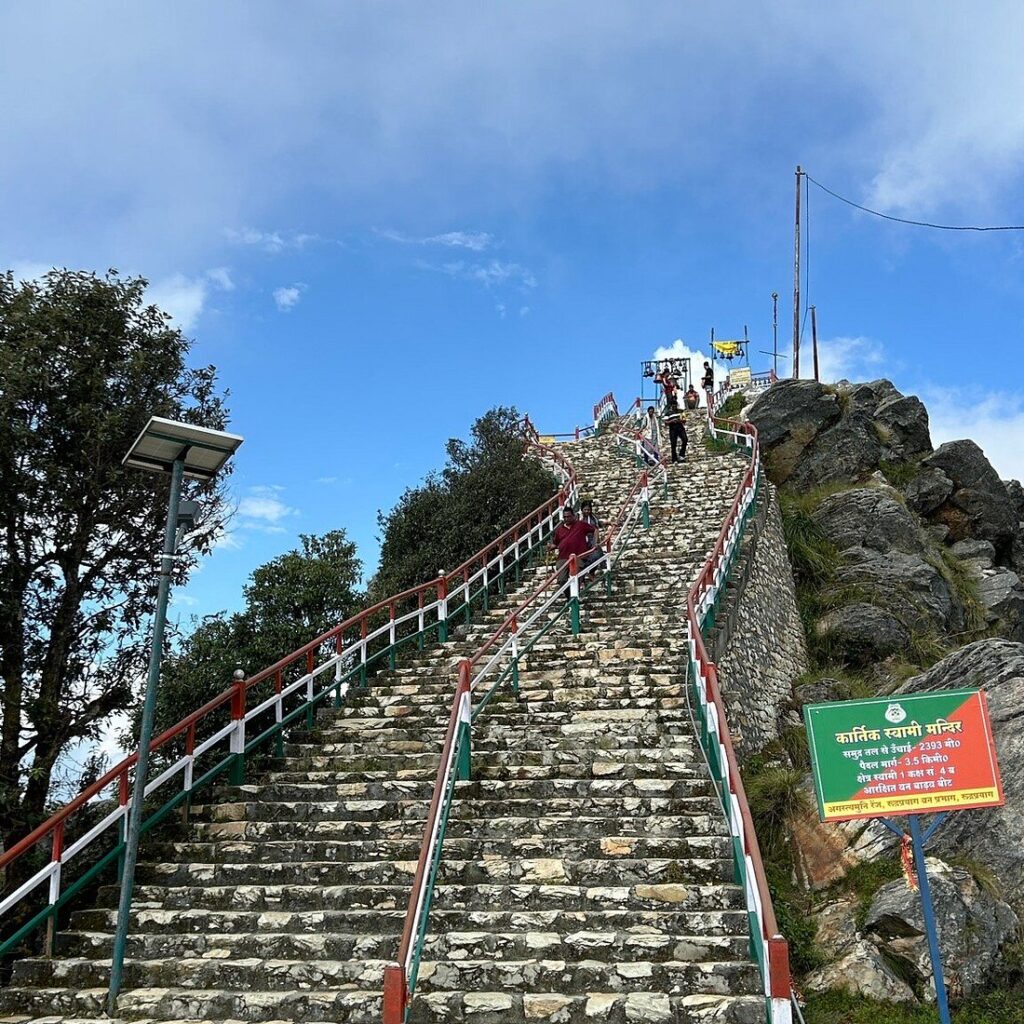
This is where sources genuinely disagree, and the author won’t pretend otherwise. Depending on which trekking guide or reviewer you read, the final staircase is described as anywhere from about 80 steep steps to as many as 380. A few accounts simply describe the last 500–800 metres as continuous stone stairs without giving an exact count.
What’s consistent across every account: the staircase sits right at the end, it’s the steepest section of the whole route, and it’s narrow enough that the ridge falls away on either side as you climb. Treat any specific step-count you read online as an estimate – the trail hasn’t been formally surveyed and re-published with a fixed number. Budget for a tough final push regardless of the exact figure.
How Many Kilometers Is the Kartik Swami Trek?
The trek itself runs 3 kilometres one way from Kanakchauri village to the temple – 6 kilometres round trip. A handful of sources round it up to 3.5 km, which likely accounts for the winding switchbacks near the top rather than a straight-line measurement.
Most trekkers cover the ascent in somewhere between one and three hours, depending on fitness and how many photo stops they take. Fast movers have done it in under an hour. Families with children, or anyone stopping often to admire the Himalayan views, should plan closer to two to three hours each way.
Which Village Is Near Kartik Swami Temple?
Kanakchauri. This small village on the Rudraprayag–Pokhri road is the starting point for the entire trek and the last spot where a car can go. It’s a quiet settlement with basic guesthouses, and many pilgrims choose to stay overnight here so they can begin the climb before sunrise – the temple’s early-morning views are considered its biggest draw.
Which Peaks Are Visible From Kartik Swami Temple?
This is genuinely the payoff for the climb. On a clear day, the summit delivers a sweeping panorama that includes Chaukhamba, Kedarnath Dome, Neelkanth, Trishul, Bandarpunch, and the Nanda Devi group in the distance. A few trekkers have also pointed out Swargarohini and the Chandrashila ridgeline from certain angles.
Cloud cover rolls in fast at this altitude, though. Locals and repeat visitors consistently recommend starting the trek before 8:00 AM, since the peaks are usually crisp and visible in the early hours and get swallowed by mist as the day warms up.
How to Reach Kartik Swami Temple by Car?
Drivers coming from Dehradun follow this route: Dehradun → Rishikesh → Devprayag → Rudraprayag → Kanakchauri, a drive of roughly 214 km that typically takes six to seven hours depending on road conditions. Those coming from Delhi add the Delhi–Dehradun leg first, bringing the total closer to 430 km.
The road is motorable all the way to Kanakchauri village – there’s no need to trek any distance to reach the trailhead itself. Parking is available in the village, after which the 3-km trek begins on foot. From Rudraprayag town specifically, it’s about a 40-km drive to Kanakchauri, taking under two hours on a scenic but winding mountain road.
Is Kartik Swami Temple Open?
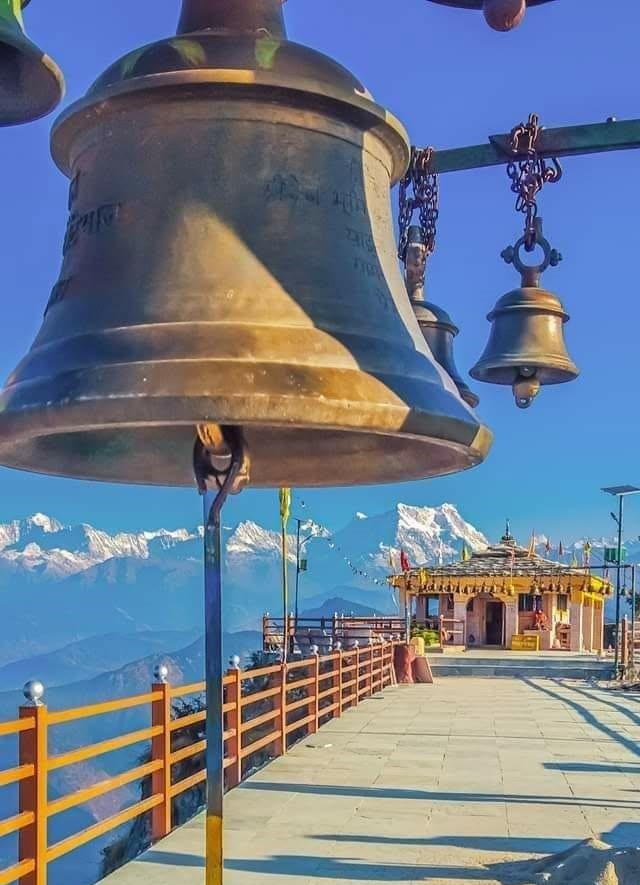
Yes, the temple generally stays open through the year, and there’s no fixed seasonal closure like some higher-altitude Himalayan shrines. That said, “open” and “easily accessible” aren’t the same thing. Heavy winter snowfall between December and February can make the final approach genuinely difficult, and monsoon months bring landslide risk on the access roads. Most travel guides point to October through June as the window offering the best mix of safety, comfort, and clear mountain views.
How Far Is Kartik Swami Mandir From Dehradun?
By road, it’s approximately 214 km from Dehradun to the Kanakchauri trailhead, via Rishikesh, Devprayag, and Rudraprayag. Drive time runs five to seven hours depending on traffic through the hill roads and how many stops you make along the way. Add roughly one to three hours on top of that for the trek itself once you park at Kanakchauri.
What Is the Height of Kartik Swami Temple, Kugti?
A quick clarification first: Kartik Swami Temple is located on Kronch Parvat in Rudraprayag district, Uttarakhand – not in Kugti, which is a different region entirely in Himachal Pradesh. This is a common mix-up in search results, so worth flagging directly.
The temple itself sits at approximately 3,050 metres (around 10,007 feet) above sea level. A couple of independent sources put the figure slightly lower, closer to 2,540–3,098 metres, which likely reflects differences in GPS measurement points (base of the staircase versus the temple platform itself). Either way, you’re looking at a high-altitude shrine well above 9,000 feet.
How Far Is Kanakchauri From Dehradun?
Kanakchauri sits right at the base of the Kartik Swami trek, and the road distance from Dehradun works out to roughly the same 214 km covered above – since the village is the final driving point before the trek starts. Expect a five-to-seven-hour drive, longer if you’re stopping at Devprayag’s river confluence or the roadside dhabas near Rudraprayag, which most travellers do anyway.
Which Railway Station Is Near Kartik Swami Temple?
Here’s another spot where sources genuinely vary, so it’s worth listing the honest range rather than picking one number to sound authoritative. Rishikesh Railway Station is the most commonly cited nearest station, with distances quoted anywhere from about 140 km to 175 km depending on the exact route calculated. Haridwar Railway Station is a close alternative, roughly 190–198 km away, and tends to have better long-distance train connectivity from major Indian cities.
Practically speaking: book your train to either Haridwar or Rishikesh, then continue by shared jeep, bus, or private taxi via Rudraprayag to Kanakchauri. Direct public transport gets thin between Rudraprayag and Kanakchauri, so most travellers arrange a taxi for that last leg.
Final Word
Is the Kartik Swami Temple trek difficult? Not really – not in the way that scares off a beginner. What it demands is respect for that final staircase, an early start to beat the cloud cover, and reasonable fitness to handle a thin-air climb at altitude. Get those three things right, and the 360-degree Garhwal Himalaya view waiting at the top makes every one of those steps worth it.

Travel Writer | Founder of Welcome Uttarakhand
Amit Negi has been exploring Uttarakhand’s temples, trekking routes, hill stations, and hidden villages for several years. Through Welcome Uttarakhand, he shares practical travel guides, local insights, and itinerary tips to help visitors plan memorable trips across the state.