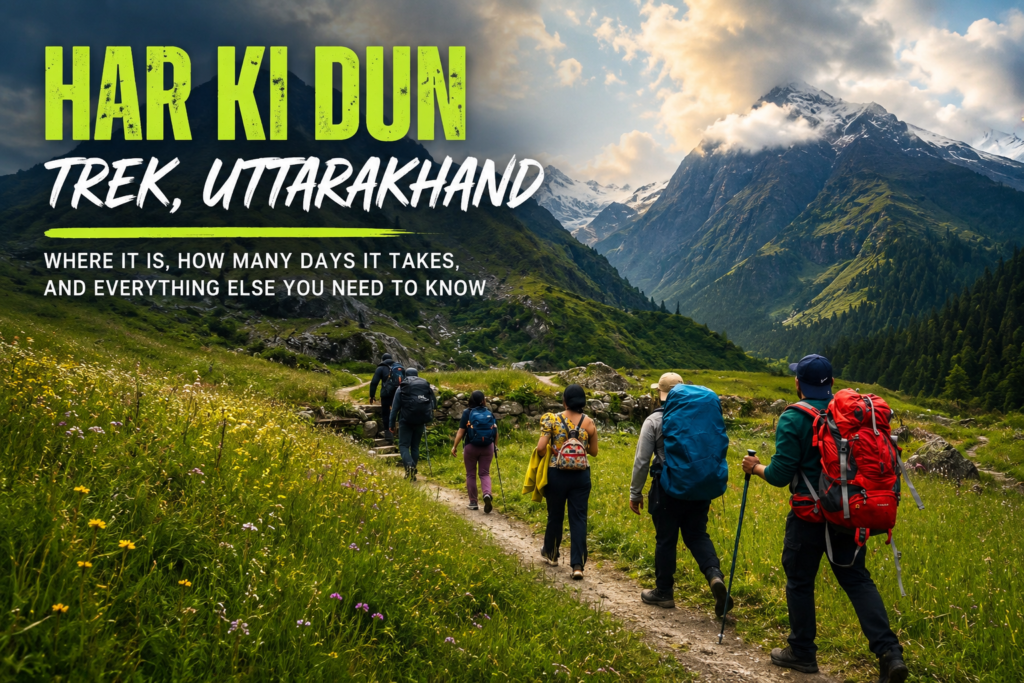
A valley that ancient explorers were writing about back in the 1800s, long before anyone printed a trekking map for it. That’s Har Ki Dun in a nutshell. Wooden houses still stand mid-air on stilts in villages like Osla and Gangad. Someshwar Devta temples still get their doors opened only on certain days because locals believe the gods themselves move between shrines with the seasons. If you’ve been searching “har ki dun trek uttarakhand” and getting a dozen half-answers, here’s the full picture – where it is, how long it takes, how tough it really is, and how to get there.
Where Is Har Ki Dun Trek Located?
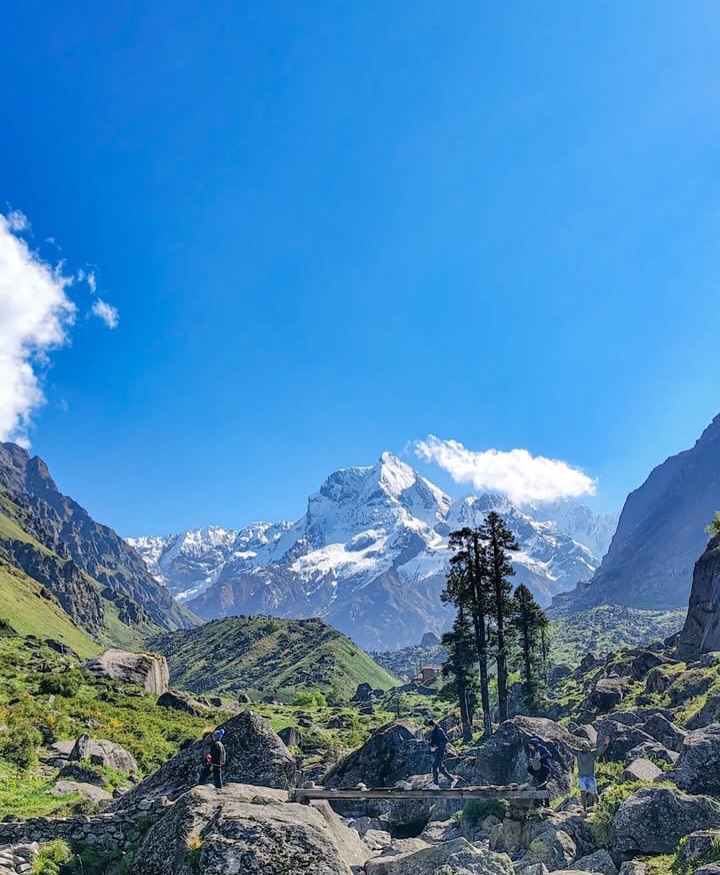
Har Ki Dun sits in the western part of Garhwal, in the state of Uttarakhand, carved out over centuries by the Thamsa (Supin) River. The name itself translates to “Valley of Shiva,” and every village along the route – Taluka, Dhatmeer, Dharkot, Gangad, Osla – has its own Someshwar Devta temple to prove it.
The trek’s base camp is Kotgaon, a small settlement in the Mori Tehsil of Uttarkashi district. From Kotgaon, you’re already looking at postcard views: the Swargarohini peaks catching the evening light, terraced fields, and traditional wooden homes packed close together against the cold.
Har Ki Dun Trek: Which District and State?
Quick answer, since people search this a lot: Har Ki Dun trek is in Uttarkashi district, Uttarakhand. The valley falls within the Govind Pashu Vihar National Park and Wildlife Sanctuary, which is also why the forest department shuts the trail down every year from December through mid-March – the animals need that stretch undisturbed.
How Many Days Is the Har Ki Dun Trek?
This is where a bit of nuance helps, because the answer depends on what you’re counting.
| What’s being counted | Duration |
| Full itinerary (Dehradun to Dehradun) | 7 days |
| Actual trekking days on the trail | 5 days |
| Trek length including travel buffer, per Indiahikes’ own FAQ | 8 days |
Here’s how that breaks down. Day 1 is the drive from Dehradun to Kotgaon. Days 2 through 6 cover the actual trekking – Dharkot to Gangaad, Gangaad to Kalkatiyadhar via Osla, Kalkatiyadhar to Har Ki Dun and back via Boslo, Boslo to Devsu Thatch, and finally Devsu Thatch back to Dharkot. Day 7 is the return drive to Dehradun. So when someone tells you Har Ki Dun is a “6-day trek” or a “7-day trek,” they’re not necessarily wrong – it depends on whether they’re counting the drive days.
How Long Is the Har Ki Dun Trek (Distance)?
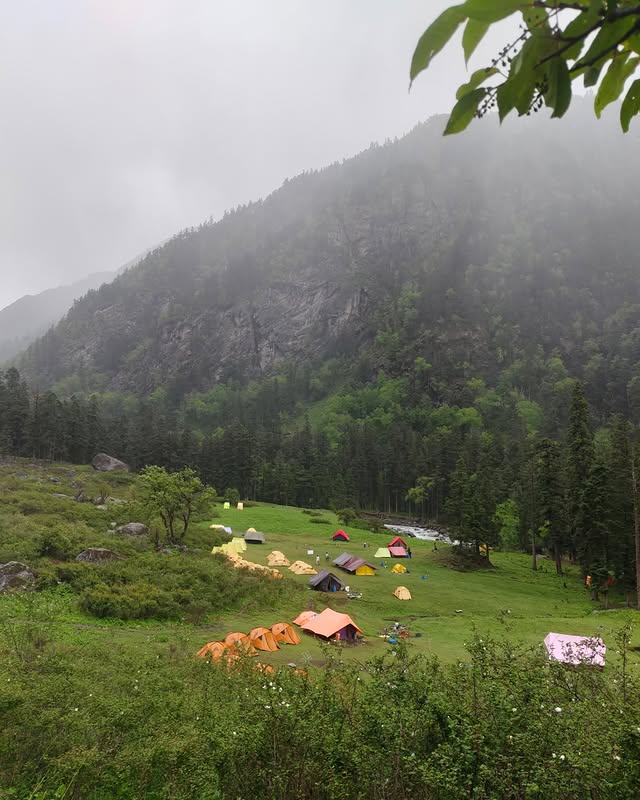
Across the five trekking days, you’ll cover roughly 37 km. It isn’t evenly spread, though. Day 2 is a short, gentle 1.6 km stretch from Dharkot to Gangaad. Day 4, the summit day from Kalkatiyadhar to Har Ki Dun and on to Boslo, is the longest at around 10.5 km. Day 6, heading back to Dharkot, runs close behind at 10.3 km.
Altitude-wise, the trek climbs from roughly 6,900–7,000 ft at the lower villages up to 11,600 ft at the Har Ki Dun summit point – a gain of about 5,500 ft spread across the week. And, well, that’s a fair climb for something that doesn’t sound dramatic on paper.
How Difficult Is the Har Ki Dun Trek?
Moderate. That’s the official grading, and it’s a fair one – this isn’t a trek to attempt with zero preparation, but it’s also not reserved for seasoned mountaineers.
A few things push it into “moderate” territory rather than “easy”:
- Distance per day. Several days run 8–10+ km, which adds up when you’re doing it on mountain terrain, not flat ground.
- Rocky, uneven sections. The stretch from Gangaad to Kalkatiyadhar is notably rocky, with loose boulders that can twist an ankle if you’re not watching your footing.
- River crossings. Wooden and cement bridges help, but they occasionally get washed away, and you may need a rope-and-pulley setup to cross.
- Altitude. You touch nearly 10,000 ft as early as day two, at Kalkatiyadhar. Acute Mountain Sickness is a real risk above that height, regardless of how fit you are.
Indiahikes recommends being able to jog 5 km in under 35 minutes before you sign up – that’s roughly the bar for “fit enough to enjoy this, not just survive it.” Kids under 14 are exempt from that fitness check, but trekkers above 58 need a treadmill test cleared beforehand.
Only one exit point exists on this trek – retracing your steps back to Taluka and Kotgaon – so evacuation from deep inside the valley can take close to 24 hours if something goes wrong. Worth knowing before you commit, not something to be alarmed by.
How to Reach Har Ki Dun Trek

Getting to Har Ki Dun happens in two stages: reach Dehradun first, then travel onward to Kotgaon.
Reaching Dehradun:
- By air: Jolly Grant Airport in Dehradun has direct flights from most major Indian cities.
- Cheaper alternative: fly into Delhi, then take an overnight bus or train to Dehradun.
- By train: several direct trains run between Delhi and Dehradun – arrive a day early (on “Day Zero”) so you’re rested before the long drive ahead.
Reaching Kotgaon from Dehradun: It’s about 195–200 km, and the drive takes 9–10 hours on mountain roads, passing through Mussoorie, Naugaon, Mori, and Purola. If you’re travelling independently rather than through an organised trek, there’s no direct bus to Kotgaon – you’ll need to first reach Sankri or Mori and then hop a shared jeep the rest of the way. Sankri, incidentally, is also the base camp for the Kedarkantha trek, so it’s your last real chance to pick up any trekking gear you forgot.
Best Time to Trek Har Ki Dun
Unlike a lot of Himalayan treks that squeeze into a two-month window, Har Ki Dun stays open for almost seven months of the year.
- March to June (spring/summer): Daytime temperatures sit between 18°C and 24°C, dropping to 3–8°C at night. Expect lingering snow patches in March, gradually giving way to green meadows and blooming rhododendrons by May.
- September to November (autumn): Cooler, with daytime highs of 8–10°C and nights dipping to 0°C or below. Fewer crowds, clearer air, and the first snowfall of the season usually arrives around mid-December.
- December to mid-March: Closed. The forest department shuts the trail during this window to protect wildlife migration in the sanctuary, and heavy snow makes the upper campsites inaccessible anyway.
If solitude matters more to you than warm weather, aim for the September–November window. If you’d rather trek with company and don’t mind the crowds, March through June is the busier, more popular stretch.
Is Har Ki Dun Worth It?
Most valley treks in India are a means to an end – you pass through one valley to reach a pass or a lake elsewhere. Har Ki Dun flips that. The valley itself is the destination, from the meadows of Kalkatiyadhar to the forests of Boslo, with Swargarohini peak rising almost vertically from the valley floor the entire way. Add the living culture in villages like Osla and Gangad – Koti-Banal architecture, centuries-old temple traditions, wooden houses still standing exactly as they were generations ago – and you get a trek that’s rare in that it delivers on both landscape and heritage, not just one or the other.

Travel Writer | Founder of Welcome Uttarakhand
Amit Negi has been exploring Uttarakhand’s temples, trekking routes, hill stations, and hidden villages for several years. Through Welcome Uttarakhand, he shares practical travel guides, local insights, and itinerary tips to help visitors plan memorable trips across the state.