
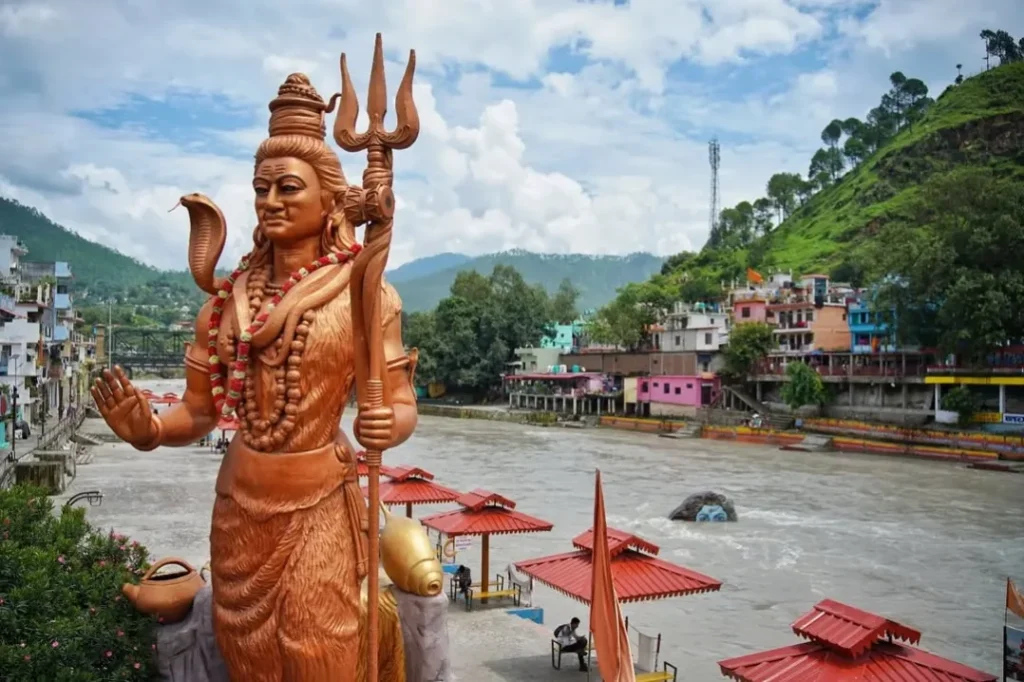
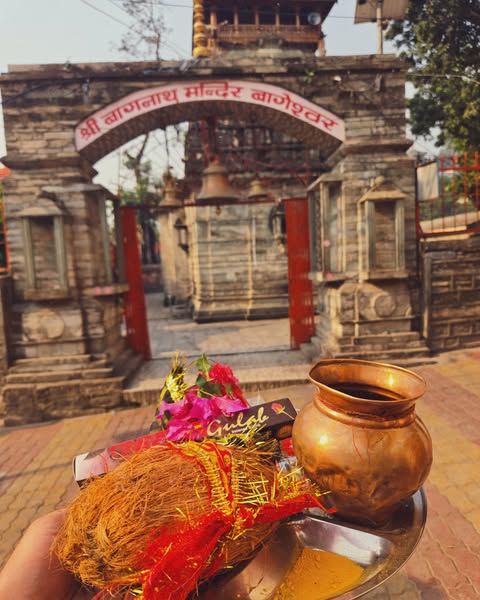
Stand at the confluence of the Sarayu and Gomati rivers in Bageshwar, and you’ll hear bells before you see the temple. Hundreds of them, hung by pilgrims over centuries, ring loosely in the mountain wind. That sound is the first clue that Bagnath Temple, Bageshwar, Uttarakhand isn’t just another stop on a Himalayan road trip. It’s the place that gave an entire district its name.
This guide sorts out what “Bageshwar Temple” actually refers to, walks through the two major temple sites in the area – Bagnath and Baijnath – and clears up a mix-up that trips up a lot of searchers: Bageshwar Temple in Uttarakhand is not Bageshwar Dham in Madhya Pradesh. More on that shortly. Simple mix-up, different state entirely.
Which “Bageshwar Temple” Are You Looking For?
Search “Bageshwar Dham temple Uttarakhand” and you’ll land in a genuinely confusing corner of the internet. Here’s the short version.
Bageshwar Temple, Uttarakhand usually means the Bagnath Temple, an ancient Shiva shrine sitting right in Bageshwar town, Kumaon, at the meeting point of the Sarayu and Gomati rivers.
Bageshwar Dham, on the other hand, is a Hanuman temple in Gadha village, Chhatarpur district, Madhya Pradesh – roughly a thousand kilometers away. It’s become widely known in recent years through its head priest, Dhirendra Krishna Shastri, who draws large crowds through televised discourses and is frequently visited by public figures, including a former Chief Justice of India who offered prayers there.
Two different states, two different deities, two different temples. They just happen to share a name. If your search intent is the Himalayan pilgrimage town in Kumaon, everything below is about that one.
Bagnath Temple: The Heart of Bageshwar Town
Bagnath Temple sits inside Bageshwar town itself, and it’s the reason the town carries this name at all – “Bageshwar” comes from Vyaghreshwar, meaning “Tiger Lord,” an epithet of Shiva.
The legend behind the name
According to Hindu mythology, the sage Markandeya once performed penance and worshipped Shiva at this exact spot. Pleased with his devotion, Shiva is said to have appeared before him in the form of a tiger. That encounter is where the name Bagnath – and by extension, Bageshwar – comes from.
Bagnath Temple History: How Old Is It, Really?
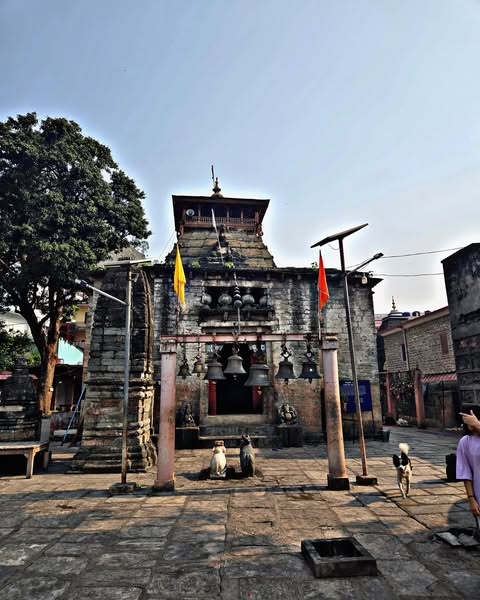
Ask five sources for the temple’s construction date and you’ll get five slightly different answers. That’s not sloppy reporting – it reflects genuine layers of history at the site. Some records point to worship here as early as the 7th century AD, with the standing structure rebuilt or expanded centuries later under the Chand dynasty.
| Source | Claimed construction date |
| Bageshwar District Administration | Around 1450 AD, under Kumaon king Laxmi Chand |
| Wikipedia – Bagnath Temple | 1602, credited to Laxmi Chand |
| Uttarakhandi.com | 1640, attributed to Laxmi Chand of the Katyuri dynasty |
| Sannidhi / temple heritage sites | Existence traced to the 7th century, with the present nagara-style structure dated to 1450 |
Reckon it this way: the site’s spiritual life almost certainly predates any single king’s reign, and the temple as it stands today was most likely completed under Laxmi Chand of the Chand dynasty somewhere in the 15th to 17th century. If you need one date for a caption, 1450 is the one repeated most often across heritage sources. If you need the honest answer, historians are still working it out.
What you’ll actually see there
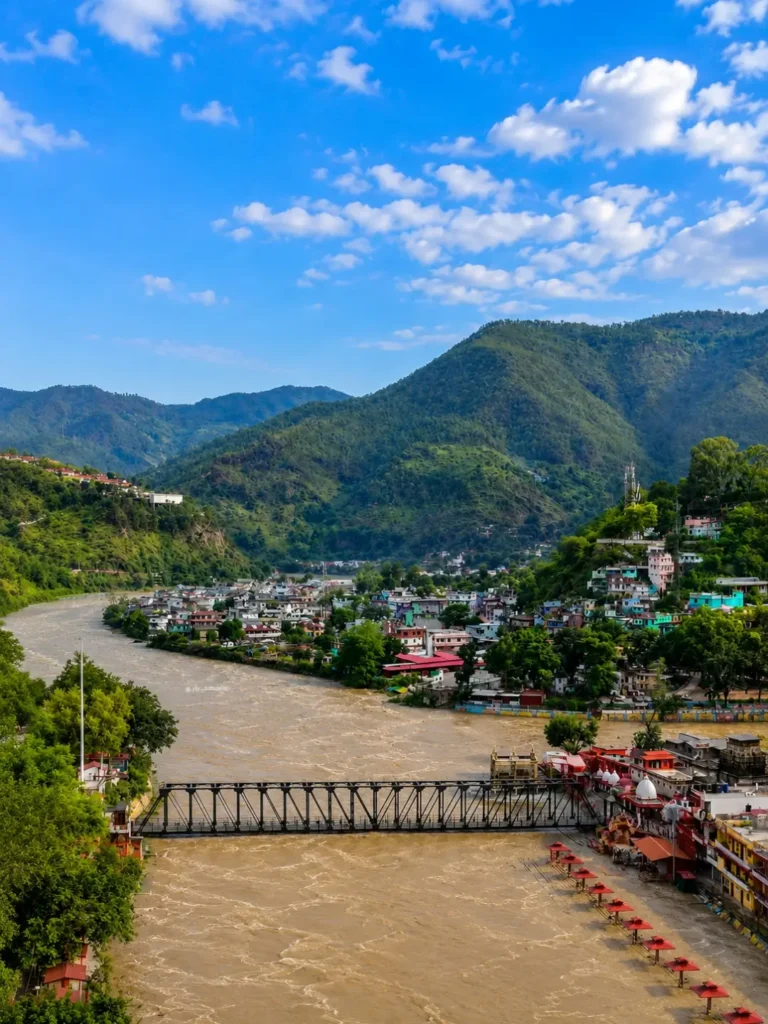
The temple sits at the confluence of the Sarayu and Gomati rivers and is known for detailed stone carvings and rows of bells hung across its structure. Inside the main complex, there are 17 subsidiary shrines dedicated to deities including Kedareshwar, Lakshmi-Narayan, and Brahmini Devi. It’s built in the North Indian nagara style, and sits at an elevation of roughly 1,004 meters.
Getting to the temple gate itself takes a short walk. Reviewers note it’s about a 10-minute walk from the main road, and while the path isn’t ideal for anyone with mobility difficulties, most visitors find it worth the effort. Breakfast stalls dot the walk up, so you won’t go hungry.
In 1996, the Uttarakhand Archaeology Department took over the temple’s preservation, and restoration work has since uncovered older inscriptions and idols on the premises. Actually, “uncovered” undersells it – some of those finds date back to the 8th century, predating the visible temple structure by hundreds of years.
Festivals worth planning around
The temple sees its biggest crowds twice a year:
- Maha Shivratri – the main Shiva festival, drawing large numbers of devotees for night-long prayers.
- Uttarayani Fair (Makar Sankranti) – held annually in January, this is as much a cultural mela as a religious one, with stalls, folk performances, and a genuinely festive atmosphere around the river confluence.
Baijnath Temple: The Complex 20-Odd Kilometers Away
Here’s where a second wave of confusion creeps in. Baijnath Temple, Bageshwar, Uttarakhand, is often searched as if it’s the same place as Bagnath – it isn’t. It sits in its own town, a separate complex entirely, roughly 20-odd kilometers up the road.
Baijnath Temple Complex is a cluster of 18 Hindu temples in the town of Baijnath, in Bageshwar district, sitting on the banks of the Gomati river. Once upon a time this town was called Kartikyapura, and it served as the capital of the Katyuri dynasty before Bageshwar itself rose to prominence.
Dating and distance – another spot where sources diverge
| Source | Distance from Bageshwar town | Construction era |
| Wikipedia – Baijnath Temple Complex | 22 km | 12th century CE |
| Bageshwar District Administration | 26 km | Katyuri period |
| Incredible India (official tourism) | – | 9th to 12th century AD |
| Trawell.in | 21 km | 12th century |
So: somewhere between 21 and 26 km, built sometime across three or four centuries of Katyuri rule. Close enough for a half-day trip from Bageshwar, far enough that you shouldn’t try to squeeze it into a lunch break.
The main draw: a statue, not just a shrine
The main shrine, Baijnath or Vaidyanath Temple, is dedicated to Shiva and stands surrounded by 17 subsidiary shrines built on a pancharatha plan. The standout piece, by most accounts, isn’t the main lingam – it’s a striking standing statue of Goddess Parvati, carved from grey schist and crowned with 26 miniature images. Photographers linger here longer than anywhere else on the site.
Local legend holds that Shiva and Parvati were married here, at the confluence of the Garur Ganga and Gomati rivers – the same marriage myth that shows up, with a slightly different setting, in some Bagnath temple accounts. Kumaon folklore has a habit of claiming the same divine wedding for more than one riverbank. Make of that what you will.
About 3 km from the main complex sits Kot Bhramari Devi Temple, a former Katyuri-era fort site known for its Vishnu statue. Worth the detour if you’ve already made the trip out.
Getting There
Both temples sit in Bageshwar district, in Uttarakhand’s Kumaon region, and neither has a train station or airport anywhere close by. The nearest airport is Pantnagar, roughly 203 km from Bagnath Temple, and the nearest railhead is Kathgodam, about 180 km away. Most visitors drive up via Almora or Kausani, or arrive by shared taxi from Kathgodam.
If you’re basing yourself in Kausani (a common choice, given the Himalayan views), Baijnath is about 17 km away, and Bagnath Temple in Bageshwar town is roughly 40 km further. Doable as one long day, though most travelers split it into two shorter, calmer visits.
Quick FAQs
Is Bageshwar Temple the same as Bageshwar Dham?
No. Bageshwar Temple (Bagnath) is a Shiva temple in Bageshwar, Uttarakhand. Bageshwar Dham Balaji Temple is a Hanuman temple in Gadha village, Chhatarpur district, Madhya Pradesh – a different state, a different deity, run by a different institution entirely.
How old is Bagnath Temple?
Most heritage sources place the current structure somewhere between 1450 and 1640 AD, built under the Chand dynasty, though worship at the site is believed to predate that by centuries.
Are Bagnath and Baijnath the same temple?
No, they’re two separate sites roughly 21–26 km apart. Bagnath sits in Bageshwar town at the Sarayu-Gomati confluence. Baijnath is a larger complex of 18 temples in a separate town that was once the Katyuri capital.
What’s the best time to visit?
Maha Shivratri and the January Uttarayani Fair bring the temple to life, but they also bring crowds. For a quieter visit with clear mountain views, aim for October through mid-December, or April to early June, before the monsoon.

Travel Writer | Founder of Welcome Uttarakhand
Amit Negi has been exploring Uttarakhand’s temples, trekking routes, hill stations, and hidden villages for several years. Through Welcome Uttarakhand, he shares practical travel guides, local insights, and itinerary tips to help visitors plan memorable trips across the state.