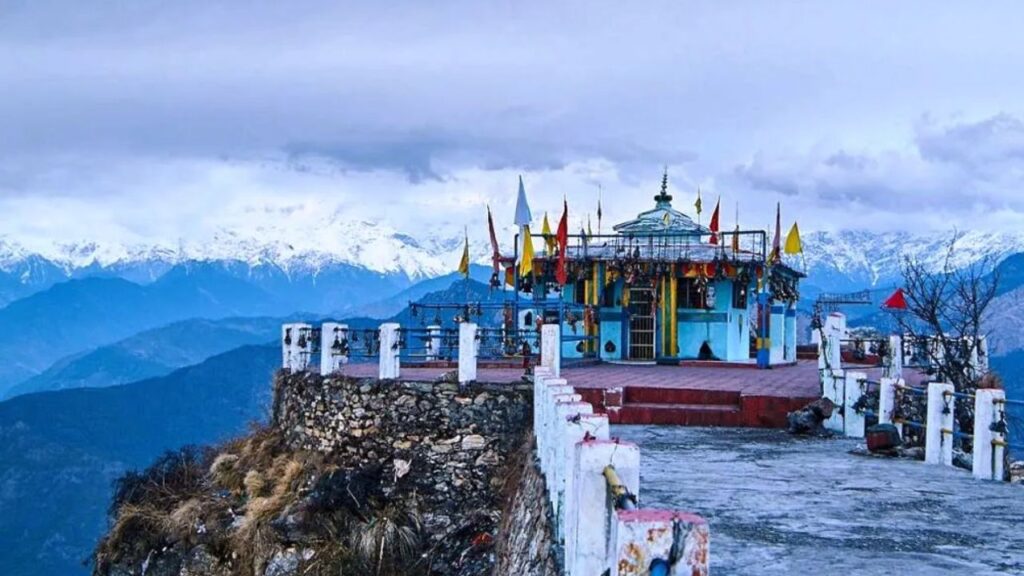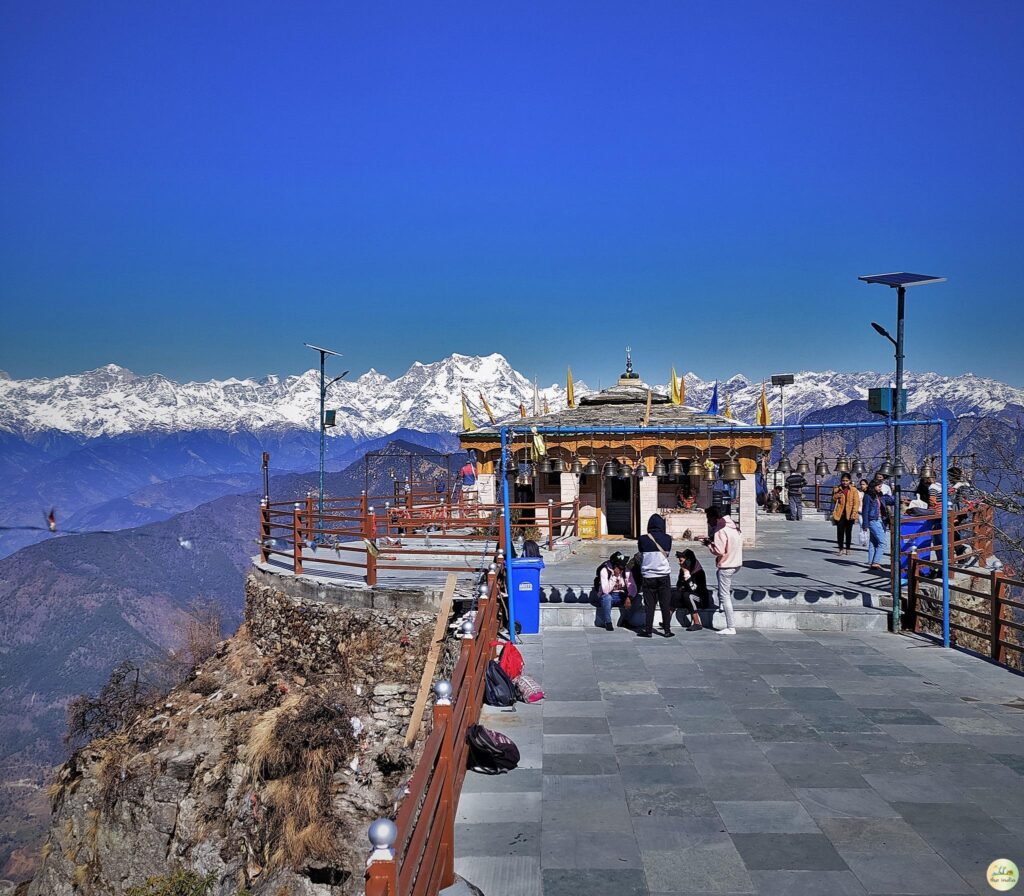
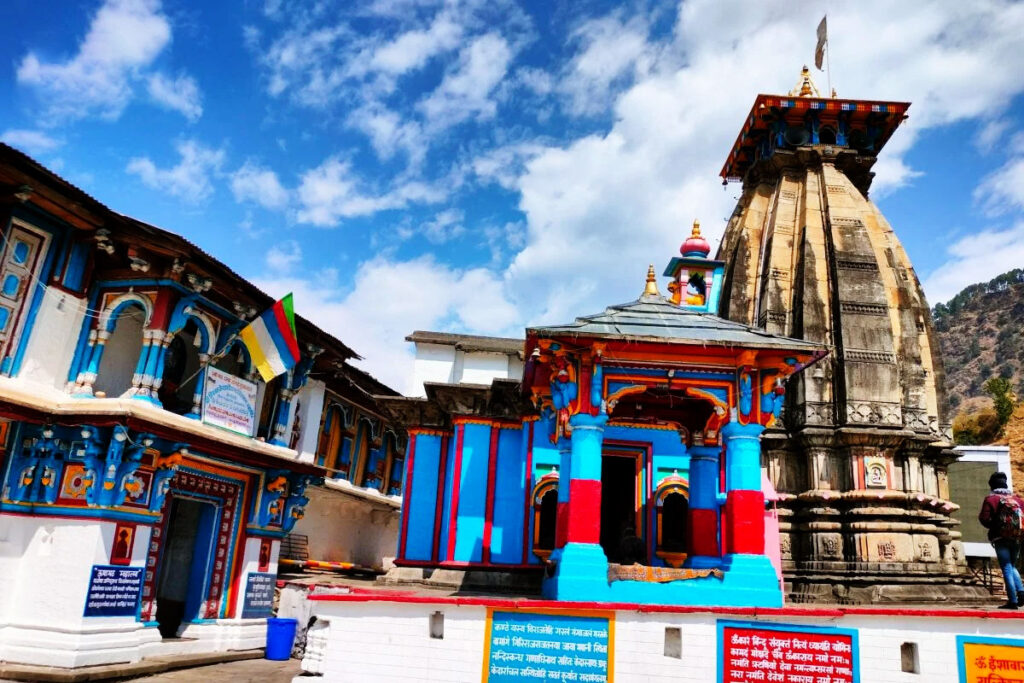
For six months of the year, Lord Kedarnath doesn’t live in Kedarnath.
That’s not a riddle. When snow seals off the high Himalayan shrine every winter, the idol travels down in a ceremonial procession to a quieter town called Ukhimath, in Uttarakhand’s Rudraprayag district. It settles into the Omkareshwar Temple and stays there, worshipped daily, until the mountain reopens in spring. For pilgrims who can’t make the trek to Kedarnath itself, this is where the darshan happens instead.
This guide covers what the Omkareshwar Temple in Ukhimath actually is, why it matters, and what to know before visiting.
The History of Omkareshwar Temple, Ukhimath
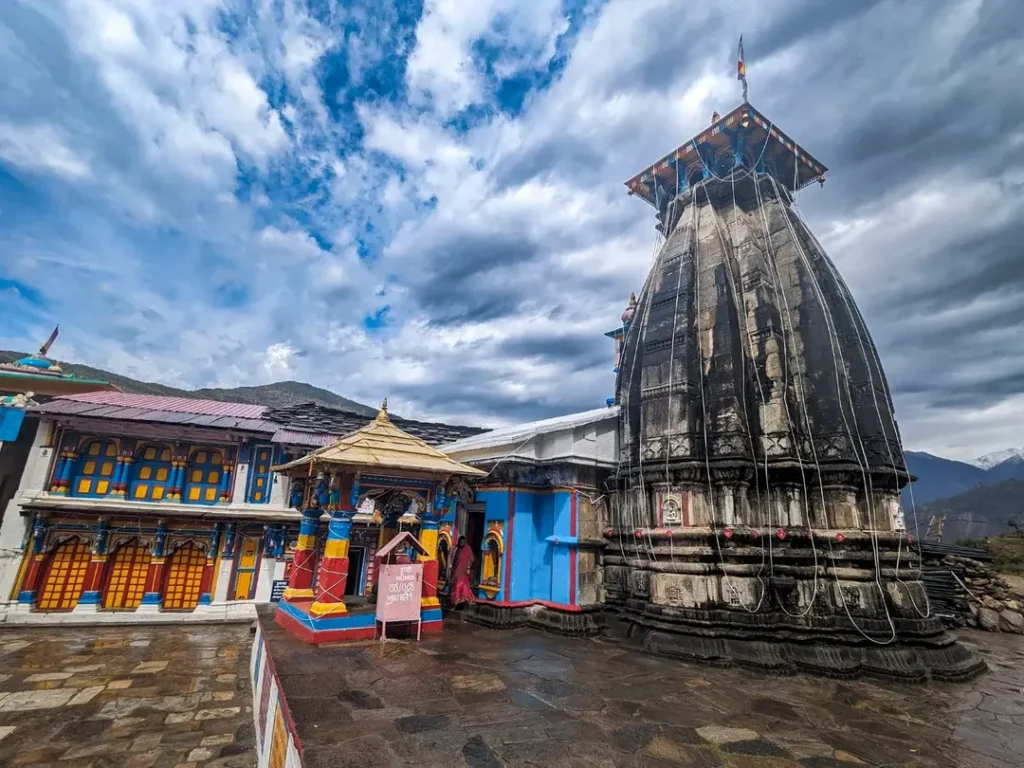
Nobody has a firm date for when this temple was built. And that’s actually part of its story.
Local tradition holds that the temple predates several of the more famous shrines in the region, though records from that era are thin on the ground. One regional travel guide attributes construction to the 8th century, under the Katyuri kings – a dynasty known for temple-building across Kumaon and Garhwal. Other sources are more cautious, describing it simply as “several hundred years old” with no confirmed founding date.
| Source | Claim on construction era |
| Manchala Mushafir travel guide | 8th century, built by the Katyuri kings |
| Multiple regional pilgrimage guides | Undated; described only as pre-dating many nearby temples |
Take that as a range, not a fact carved in stone. Literally.
What’s better documented is the mythology woven into the site. Two stories anchor it. The first involves the sage Mandhata, who is said to have stood on one leg in penance for twelve years at this exact spot until Lord Shiva appeared before him as Omkar – the primordial sound “Om.” That’s where the temple gets its name. The second story explains the town’s name: Ukhimath is believed to be a shortened form of “Ushamath,” after Usha, daughter of the demon king Banasura, who was married here to Aniruddha, grandson of Lord Krishna. Idols of Usha and Aniruddha are still worshipped inside the temple complex today, alongside the main Shivling.
Architecturally, the temple keeps things plain. Stone walls built to survive Himalayan winters, a wooden main gate, tiered shikhara roofing, and a courtyard ringed by smaller shrines – nothing ornate, which fits Lord Shiva’s more ascetic character. Some sources describe the style as Katyayani; others simply call it traditional Himalayan stone architecture. Either way, function clearly came before flourish.
Why Ukhimath and Its Temple Are Famous
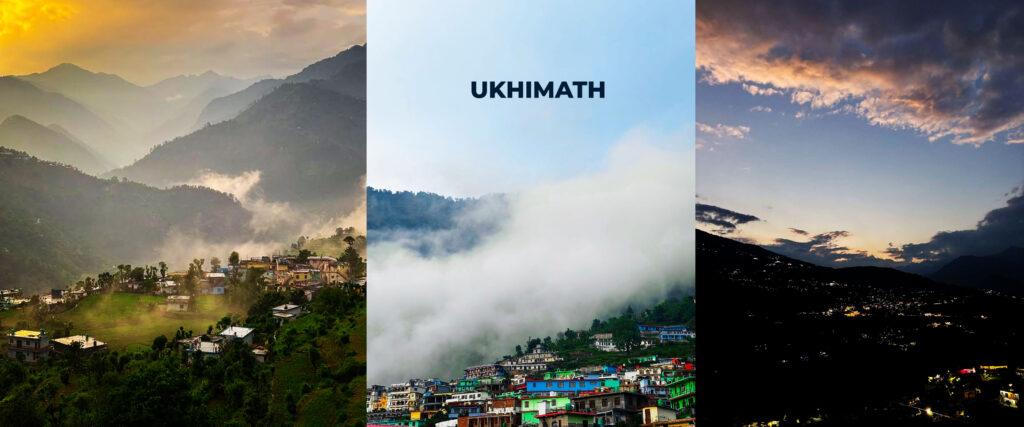
Here’s the short version: Omkareshwar Temple is the official winter seat – the gaddi – of Lord Kedarnath, and also of Lord Madhyamaheshwar, the second of the Panch Kedar shrines.
Every year after Diwali, once snow makes the Kedarnath route impassable, priests carry the utsav doli – the processional idol – down through the mountains to Ukhimath. From roughly November through April, all of Kedarnath’s daily rituals, from the morning aarti to the evening prayers, happen at this temple instead of at 3,583 metres above sea level, a tradition documented in detail by Kedarnath Tourism’s guide to the temple. Madhyamaheshwar’s idol makes the same journey.
That’s a big deal for two reasons. First, it means elderly or physically unable pilgrims who can’t handle the Kedarnath trek get a genuine, spiritually equivalent alternative during winter. Second, it makes Ukhimath one of the very few places in India where two Panch Kedar deities are worshipped under one roof, at the same time, for half the year. Not many towns can say that.
Beyond its Kedarnath connection, Ukhimath also holds its own religious weight through the Usha-Aniruddha legend mentioned earlier, and it functions as a base town for treks toward Chopta, Tungnath, and Deoria Tal. So even travelers who aren’t there for winter darshan tend to pass through.
Ten Famous Temples in Uttarakhand (Where Omkareshwar Fits In)
Uttarakhand earns its “Devbhoomi” – land of the gods – nickname honestly. Omkareshwar sits comfortably among a state full of major shrines:
- Kedarnath Temple – the original summer seat, one of the twelve Jyotirlingas
- Omkareshwar Temple, Ukhimath – Kedarnath’s winter seat
- Badrinath Temple – dedicated to Lord Vishnu, part of the Char Dham
- Madhyamaheshwar Temple – second of the Panch Kedar
- Tungnath Temple – the highest Shiva temple in the world
- Kalimath Temple – a Shakti Peetha near Ukhimath (more on this below)
- Rudranath Temple – another Panch Kedar shrine
- Kalpeshwar Temple – the only Panch Kedar accessible year-round
- Gangotri Temple – source shrine of the Ganga
- Yamunotri Temple – source shrine of the Yamuna
Notice how many of these connect back to Ukhimath, either directly (as winter seats) or by proximity. That’s not a coincidence – the town sits at a genuine crossroads of Garhwal’s pilgrimage geography.
Is There a Shakti Peeth Near Ukhimath?
Yes – and it’s closer than most people expect.
Kalimath, located in the same Rudraprayag district as Ukhimath, is one of the 108 Shakti Peethas in India – confirmed by Uttarakhand Tourism’s official Shakti Trail page, which lists Kalimath alongside Mansa Devi and Chandi Devi as part of the state’s Shakti pilgrimage circuit. Legend holds that Goddess Kali defeated the demon Raktabeej here and then went underground to rest. Unusually, there’s no statue of the goddess inside – just a silver plate, or pindi, marking the spot where she’s said to have disappeared. It’s a quieter, less crowded site than most Shakti Peethas, which suits its slightly mysterious reputation.
Uttarakhand has other well-known Shakti Peethas too, including Purnagiri near Tanakpur and Surkanda Devi near Dhanaulti, but neither sits close enough to Ukhimath to combine into the same trip easily. Kalimath does. Pilgrims already headed to Omkareshwar sometimes add it as a short detour.
Five Must-See Places Near Ukhimath, Uttarakhand
If you’re making the trip out to Omkareshwar, it’s worth building a couple of extra days around it. The area rewards that.
- Chopta – often called “Mini Switzerland,” a meadow town that’s also the trailhead for Tungnath and Chandrashila
- Tungnath Temple – a moderate trek up to the world’s highest Shiva shrine, with sweeping Himalayan views
- Deoria Tal – a lake that mirrors the Chaukhamba peaks on a calm morning
- Madhyamaheshwar Temple – reachable via a longer trek, for travelers wanting to see the source shrine that Omkareshwar hosts in winter
- Kalimath – the Shakti Peetha mentioned above, an easy add-on
None of these require major detours. Most sit within a half-day’s travel of Ukhimath itself.
Practical FAQ: Visiting Omkareshwar Temple, Ukhimath
What is special about Omkareshwar Temple?
It’s one of the only temples in India where two Panch Kedar deities – Kedarnath and Madhyamaheshwar – are worshipped simultaneously for half the year. Add the Usha-Aniruddha legend and the Mandhata penance story, and you’ve got a site carrying three distinct threads of mythology under one small roof.
Why is Ukhimath famous?
Primarily as the winter home of Lord Kedarnath. Secondarily, as the mythological wedding site of Usha and Aniruddha, and as a base town for treks into Chopta, Tungnath, and Deoria Tal.
What is the best time to visit Omkareshwar Temple?
For winter darshan of the Kedarnath idol specifically, visit between November and April – that’s when the deity actually resides here. If your goal is trekking or general sightseeing around Ukhimath, the window widens; spring and early autumn bring milder weather.
What happens after visiting Omkareshwar Temple?
Most pilgrims either continue toward other Panch Kedar sites reachable from the region, or use Ukhimath as a base for the Chopta-Tungnath-Deoria Tal trekking circuit. Some also add Kalimath as a short detour before heading back.
What are the benefits of visiting Omkareshwar Temple?
Beyond the obvious spiritual draw, visiting here is genuinely useful for pilgrims who can’t handle the Kedarnath trek – elderly travelers, in particular. Worship at Omkareshwar during winter is considered spiritually equivalent to worship at Kedarnath itself, so nobody’s shut out of the darshan experience just because of the season.
Is there a dress code, or is wearing jeans allowed?
There’s no formal dress code enforced at the gate, but modest clothing is expected out of respect for local custom – this is a small-town pilgrimage site, not a tourist attraction built for casual sightseeing. Jeans are generally fine as long as they’re not distressed or overly revealing; avoid sleeveless tops or shorts.
What is not allowed inside Omkareshwar Temple?
Standard temple etiquette applies: footwear stays outside, leather items are typically discouraged near the sanctum, and photography inside the inner shrine is often restricted – check with temple staff on the day, since rules can shift slightly during festival periods. Loud or disruptive behavior isn’t welcome either, especially given how many pilgrims are there for quiet, focused worship.

Travel Writer | Founder of Welcome Uttarakhand
Amit Negi has been exploring Uttarakhand’s temples, trekking routes, hill stations, and hidden villages for several years. Through Welcome Uttarakhand, he shares practical travel guides, local insights, and itinerary tips to help visitors plan memorable trips across the state.