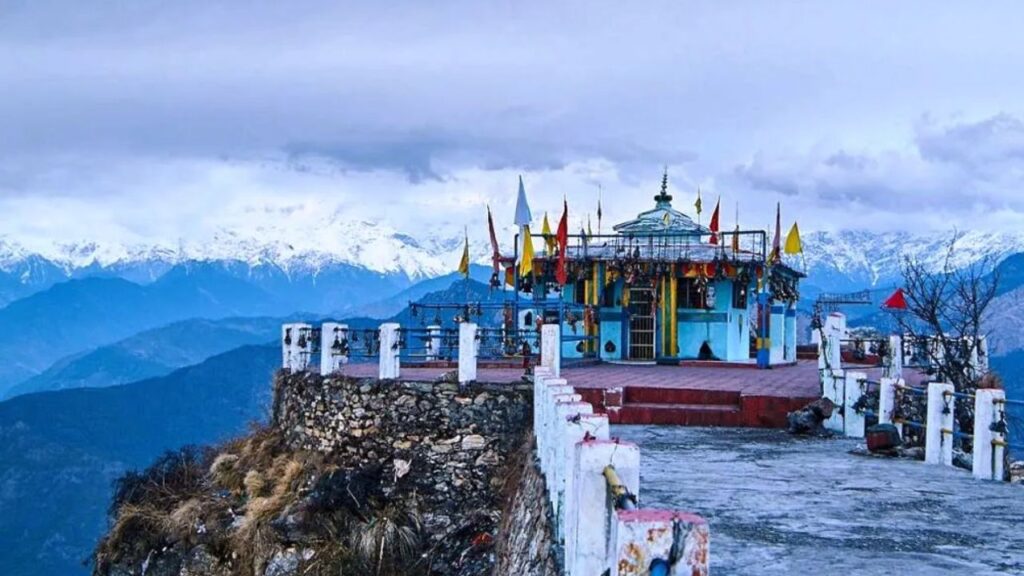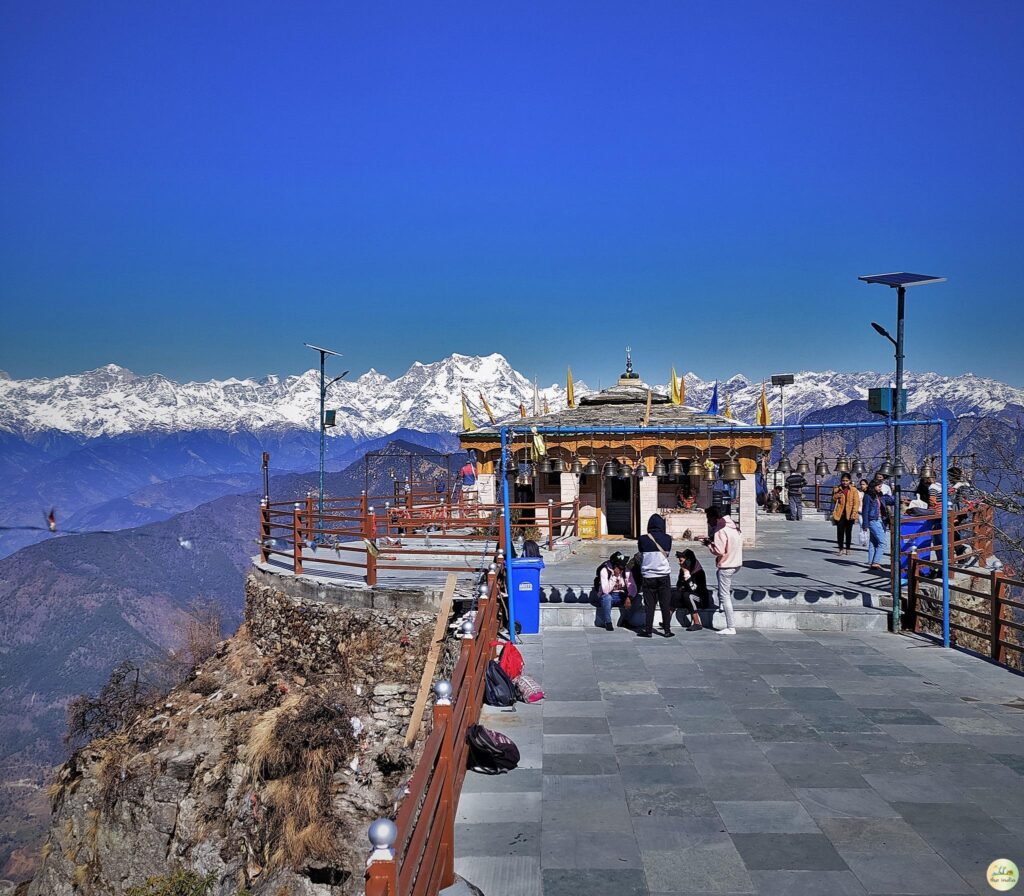

Hours after a stone idol was lifted off its rock in the Alaknanda River on 16 June 2013, floods devastated the Kedarnath valley. The recorded cause was a multi-day cloudburst. Many locals saw something else: a goddess disturbed. That argument has trailed Dhari Devi Temple in Uttarakhand ever since, and it’s why a small, roofless shrine beside the Badrinath highway is known far beyond Garhwal.
This guide covers the history of the Dhari Devi Mandir, the legend of the face that changes through the day, what happened in 2013, how to find the temple, and its link to Kedarnath. It’s a researched guide built from official and published sources, not a travelogue. Where sources disagree, the article says so.
What is Dhari Devi Temple in Uttarakhand?
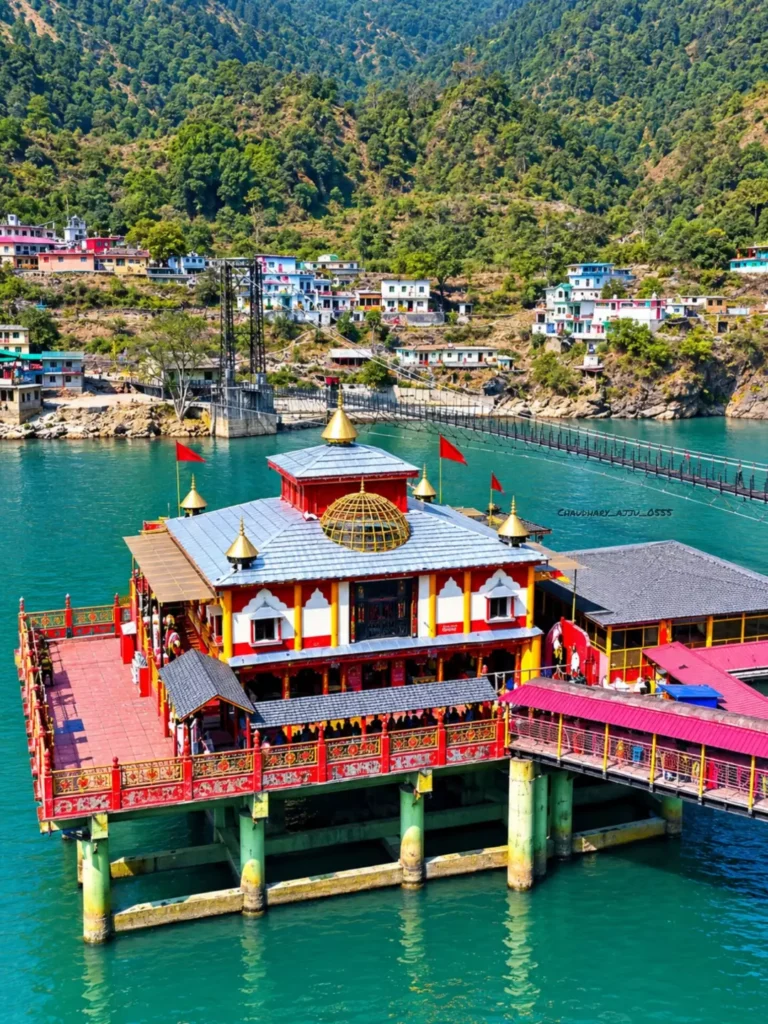
Dhari Devi is a Hindu shrine to a form of Goddess Kali. It stands on the bank of the Alaknanda at Kalyasaur in the Garhwal region, between Srinagar and Rudraprayag. Devotees know her as Maa Dhari Devi or Dhari Devi Mata, and the shrine appears in writing as Dhari Devi Mandir, Shree Dhari Devi Mandir, or simply Dhari Devi.
Tradition treats her as the guardian deity of Uttarakhand and protector of the Char Dham pilgrimage, as Wikipedia summarises. Some sources count the shrine among the 108 Shakta pithas listed in the Srimad Devi Bhagwat. Only the upper half of the idol is worshipped here. The lower half is at Kalimath.
The Pauri Garhwal district website notes that special worship is offered during Navratri.
What is the history and story of Dhari Devi Mandir?
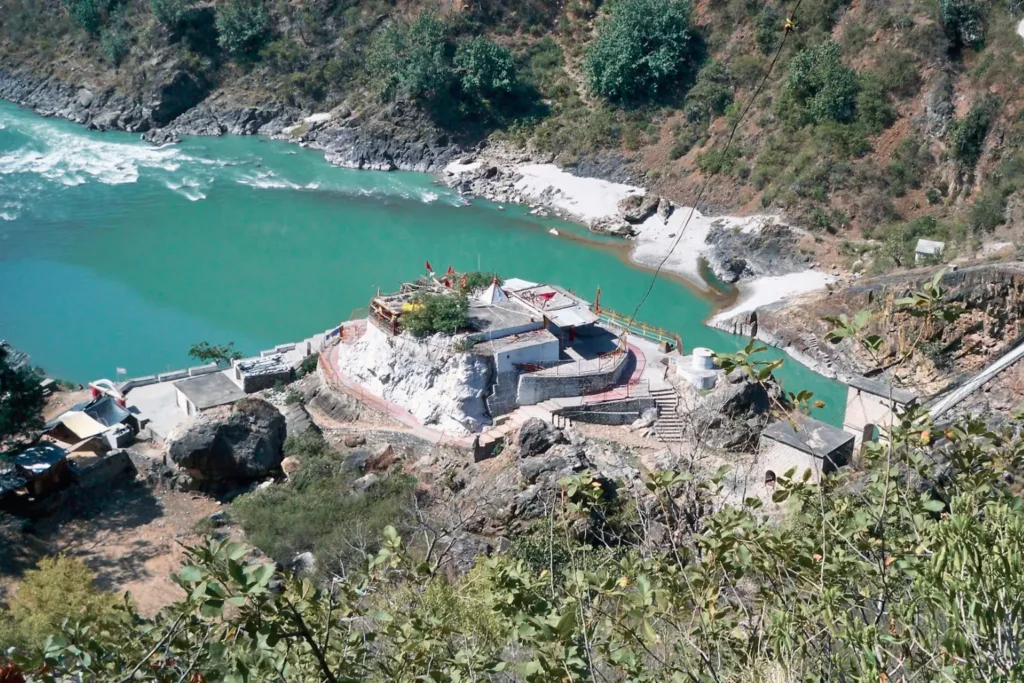
The best-known account is short. A severe flood swept away an earlier temple, and the idol ended up pinned against a rock near a village called Dharo. Villagers heard a wail from the idol, then a divine voice telling them to install her right there. That’s the origin story on the district website, and Outlook Traveller tells the same tale. Several devotional guides, such as this one from DharmikVibes, add a condition: the goddess wanted the open sky, which is why the shrine had no roof. The same blog traces the name “Dhari” to Dharo, but that’s tradition, not proven etymology.
Wikipedia also records a folk version in which Maa Dhari Devi was the youngest sister among seven brothers. The versions differ, and this guide doesn’t try to merge them.
How old is the shrine? Depends who’s asked.
| Source | Claim about age |
| Wikipedia | No clear evidence of when the first temple was built |
| GoSahin travel guide | About 3,000 years old |
| Dev Dham Yatra blog | About 600 years old |
| Musafir Resort guide | Dates to Dwapar Yuga, per Hindu mythology |
Nobody has produced a dated record. Take the larger numbers with a pinch of salt, and treat “ancient” as the safe word.
Why is it said that Dhari Devi’s face changes?
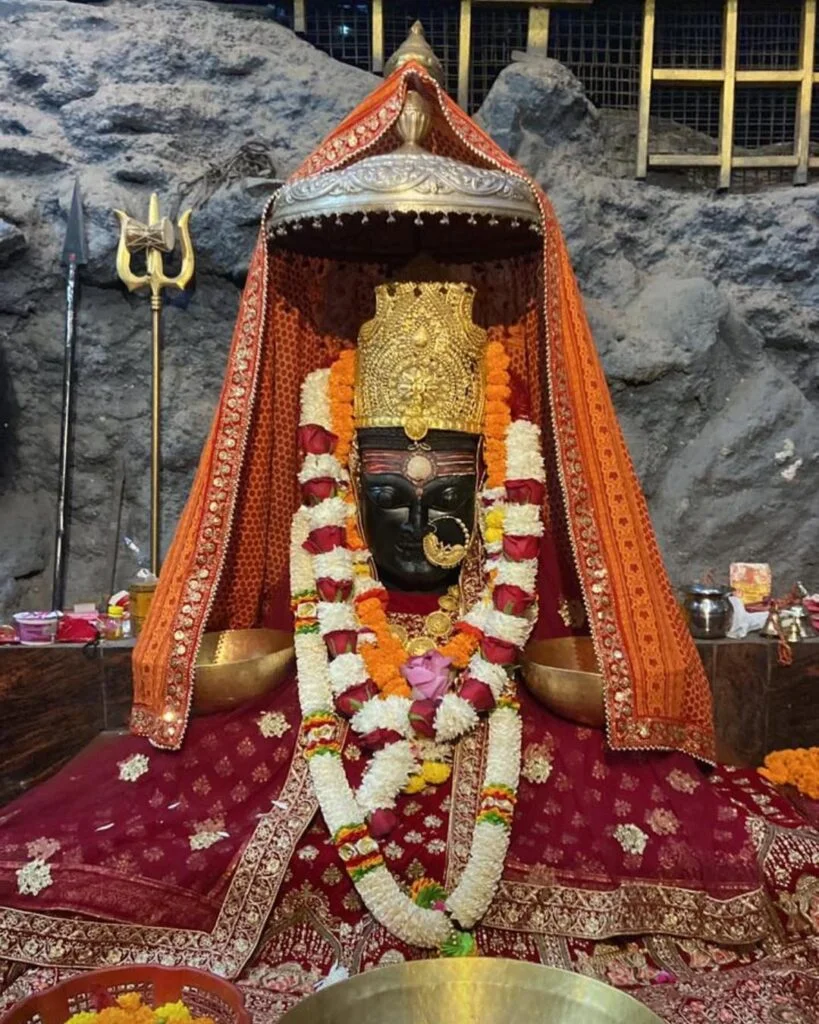
According to the district website, worshippers believe the stone deity changes face as the day progresses: a girl, then a woman, then an old lady. Travel guides such as GoSahin place these in the morning, daytime and evening.
It’s a matter of faith. The research for this guide turned up no independent record of the change, and the author doesn’t claim to have witnessed it.
Why was the Dhari Devi temple moved in 2013?
Because a dam needed the space.
The 330 MW Srinagar hydroelectric project on the Alaknanda, built by Alaknanda Hydro Power Company Ltd (AHPCL), a GVK subsidiary, put the shrine’s original site at risk from the reservoir. Plans called for lifting the shrine above the water. On 16 June 2013 the idol was moved to an elevated concrete platform, according to Wikipedia. A report published on 21 June 2013 said AHPCL officials shifted it at 7.30 pm that Sunday, and that a local women’s group, the Dhari Sewa Samiti, had protested against relocation for three years.
(Timing details wobble from source to source, so here they are side by side.)
| Source | Claim about the move |
| Amar Bharat report, 21 June 2013 | Shifted Sunday at 7.30 pm |
| Dailyhunt feature | Cranes lifted the idol around 6:10 pm |
| TourMyHoliday guide | Idol removed on 14 June |
The contemporary report is the most reliable of the three, and it points to 16 June.
News reports from the time, collected in one archive, say the Union environment ministry first opposed relocation, later revoked its stop-work order, and the Supreme Court dismissed a plea against shifting the idol. The author hasn’t verified the court order independently.
Then the rain. The floods and landslides that followed wiped out whole pilgrim towns and killed hundreds of people, and locals and devotees read the timing as the goddess’s anger at being taken from her mool sthan, her original seat, to clear the way for a hydro project (Wikipedia). But, as it turned out, the water had been building for days. Within hours. Or, to put it more accurately, the cloudburst was a multi-day event whose worst destruction fell around 16–17 June, so the idol’s move landed inside that window rather than starting it.
Two facts can be stated plainly: the idol was moved on 16 June 2013, and severe flooding struck the region. The author found no evidence of a causal link. Devotees hold a different view, and their belief is part of the temple’s living story.
What about the 1882 story?
Wikipedia says an earlier attempt to move the goddess, by a local king in 1882, was followed by a landslide that flattened Kedarnath. That claim rests on local tradition and a blog citation. No primary record turned up, so it’s best read as folklore.
Where is the idol now, and what happened to the old temple?
Before 2013 the shrine was an open platform with no roof, right at the Alaknanda’s edge, as Manchala Musafir describes. Wikipedia says a new temple was built at the original location, and several guides say the idol was reinstalled on a raised platform, still open to the sky.
Mind you, the path there wasn’t smooth. A February 2017 Times of India headline, cited on Wikipedia, said the temple was still awaiting relocation three years on. The author couldn’t find a dated official record of the final reinstallation. Anyone planning a visit should check the current arrangement with the Pauri Garhwal district tourism office or local priests.
Where is Dhari Devi Temple, and how do visitors reach it?
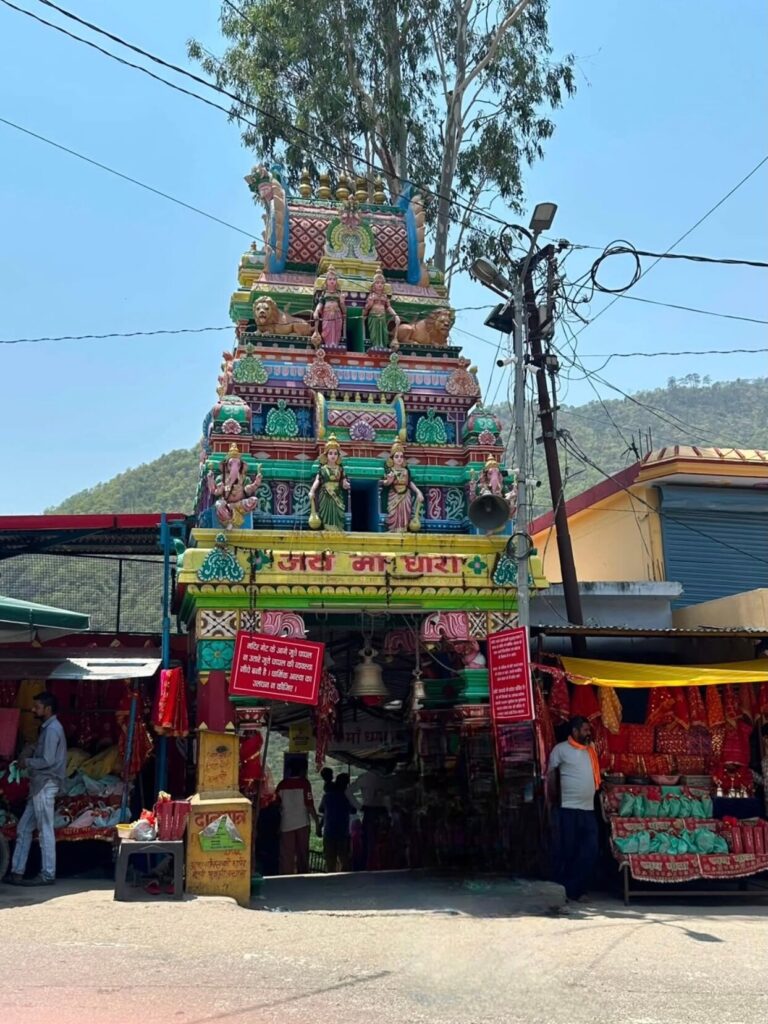
The temple is at Kalyasaur, about 15 km from Srinagar (Garhwal) on the highway toward Badrinath. A cement pathway of roughly 1 km leads from the road to the riverbank, per the district website. The river is the Alaknanda. Spellings vary (Kalyasaur, Kaliyasaur, Kaliasaur), so try all three on a map app.
| Source | What it says |
| Pauri Garhwal district website | 15 km from Srinagar; 1 km cement pathway |
| Musafir Resort guide | About 15 km from Srinagar, about 20 km from Rudraprayag |
| Wikipedia | District: Pauri Garhwal; coordinates 30°12′50″N 78°46′33″E; elevation 560 m |
| Manchala Musafir guide | Administered under Rudraprayag district |
The district question is unsettled in print, so the temple sits on the boundary of how sources describe it. Pasting Wikipedia’s coordinates into a map app is the quickest way to pin the spot. Sources also label the highway NH-55 or NH-7, so follow signs for the Srinagar–Rudraprayag stretch rather than the number.
One devotional blog says a bridge now links the shrine to the mainland. The district page mentions only the pathway. Both may be true, but the author couldn’t confirm it.
How is Dhari Devi connected to Kedarnath?
Two ways. The first is the route: the shrine sits on the highway that pilgrims use toward Badrinath and, via Rudraprayag, toward Kedarnath. Tradition names Dhari Devi as guardian of that whole circuit, and travel guides call the temple a stopover for Kedarnath, Do Dham and Char Dham pilgrims.
The second is the story. The 2013 disaster and the 1882 tale both tie her fate to Kedarnath’s.
Distance? Depends on where the trek starts.
What can visitors see at the temple, and what else is nearby?
The approach is the pathway from the road. The sanctum is an open platform, in keeping with the roofless tradition. The district website also mentions an ancient cave near the temple. Navratri brings the biggest gatherings.
Religious sites that belong to her story are Kalimath, where the lower half of the idol is worshipped, and the Kedarnath and Badrinath routes she guards. Devotees invoke her with the call “Jai Maa Dhari Devi”, and the story, belief and dispute alike, is why that call carries weight along this stretch of the Alaknanda.
Frequently asked questions about Dhari Devi Temple
Where is Dhari Devi Temple located?
At Kalyasaur in Garhwal, Uttarakhand, about 15 km from Srinagar on the highway toward Badrinath. A cement pathway of roughly 1 km leads from the road to the Alaknanda riverbank.
Which river is the Dhari Devi Mandir on?
The Alaknanda. The shrine stands on its bank, between Srinagar and Rudraprayag.
Why is Maa Dhari Devi called the protector of Char Dham?
Tradition names her the guardian deity of Uttarakhand and of the Char Dham pilgrimage. That’s a matter of belief, and pilgrims heading to Badrinath and Kedarnath pass close to the shrine.
Does Dhari Devi’s face really change?
Worshippers believe the idol appears as a girl, a woman and an old lady through the day. The author found no independent record of it, so it stays a matter of faith.
Why was the temple moved in 2013?
The 330 MW Srinagar hydroelectric project put the original site at risk from its reservoir, so the idol was shifted to an elevated platform on 16 June 2013.
Did moving the idol cause the Kedarnath flood?
The recorded cause of the 2013 floods was a multi-day cloudburst, and the author found no evidence linking the move to them. Many devotees and locals hold a different belief.

Travel Writer | Founder of Welcome Uttarakhand
Amit Negi has been exploring Uttarakhand’s temples, trekking routes, hill stations, and hidden villages for several years. Through Welcome Uttarakhand, he shares practical travel guides, local insights, and itinerary tips to help visitors plan memorable trips across the state.