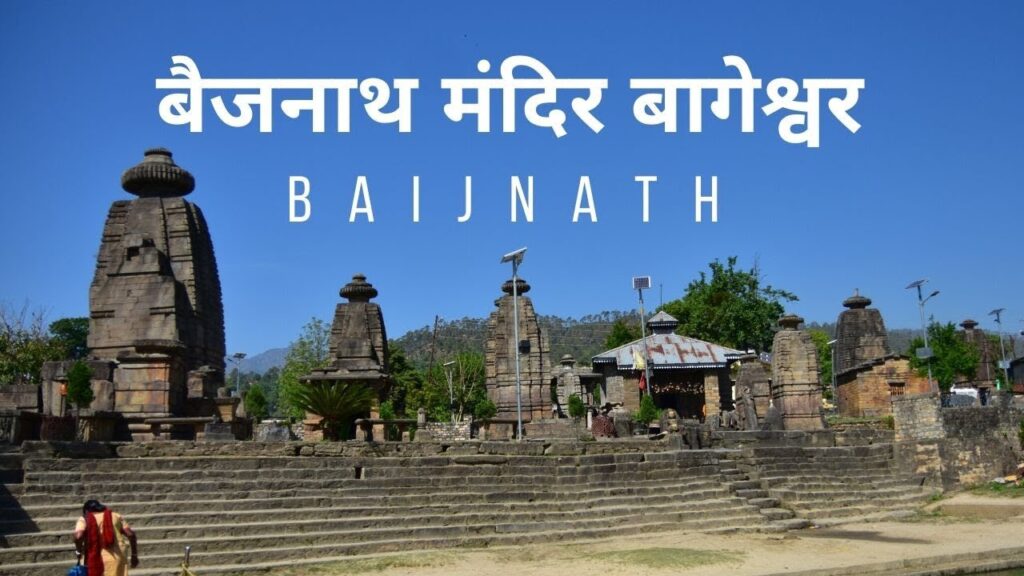
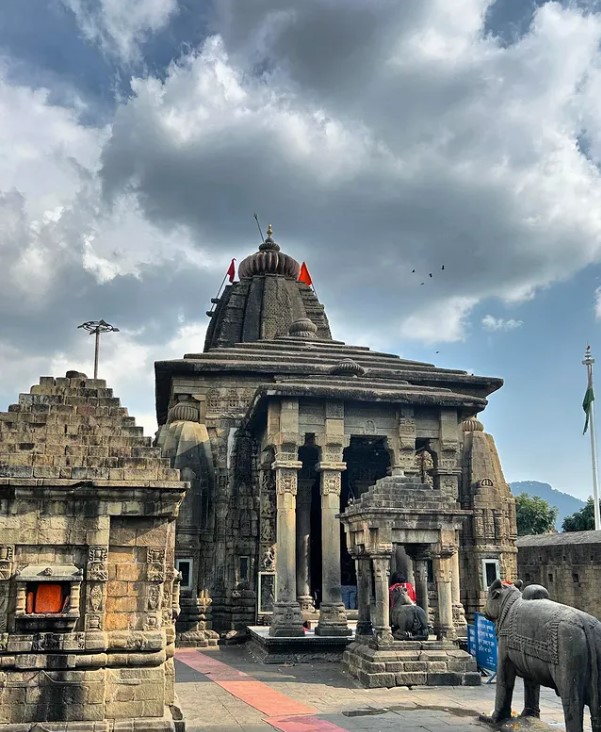
Picture eighteen stone shrines huddled together on a riverbank, their carved spires catching the early Himalayan light. No ticket counter fanfare, no loudspeaker announcements – just the sound of the Gomti moving past stones that have been sitting there since before most European cathedrals existed. That’s Baijnath. A small temple town in Uttarakhand’s Bageshwar district that once ruled an entire kingdom, and now mostly gets a two-hour stopover from travelers rushing between Kausani and Bageshwar.
It deserves more than a stopover. Here’s what actually makes this place worth the detour, drawn from historical records, Archaeological Survey of India documentation, and regional travel research.
Where Baijnath Sits, and Why Its Name Matters
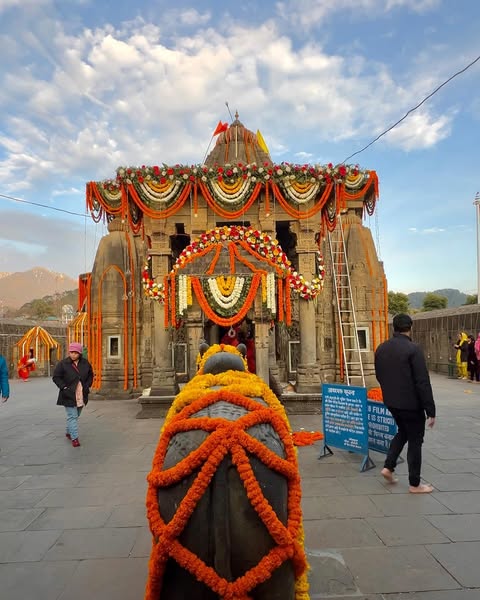
Baijnath lies in the Katyur Valley of Bageshwar district, on the left bank of the Gomti River, at an elevation of roughly 1,126 metres. The town takes its name directly from the temple – “Baijnath” is a regional rendering of Vaidyanath, meaning the Lord of Physicians, one of Shiva’s many epithets. So the settlement didn’t get named after some local landmark or ruler. The temple came first. The town grew around it.
That’s worth sitting with for a second. Most Indian temple towns evolved organically, and the temple was added later as the settlement grew wealthy enough to build one. Baijnath ran the other way – the shrine was the anchor, and Kartikeyapura (the old name for this place) grew up in its shadow as the seat of an entire ruling dynasty.
The Katyuri Dynasty and the Making of Baijnath
Here’s where the story gets genuinely interesting, and also where sources start to disagree – which, honestly, is normal for medieval Himalayan history where inscriptions are scarce and dynastic records were rarely centralized.
The Katyuri dynasty ruled parts of present-day Uttarakhand and western Nepal, with most historians dating their rule somewhere between the 7th and 12th centuries CE. The kingdom’s founder, Vasudev Katyuri, was originally of Buddhist background before shifting toward Brahmanical Hindu practice – a change some historians link to Adi Shankara’s religious campaigns in the region during the late 8th and early 9th centuries. The capital started at Joshimath in the Alaknanda valley. It didn’t stay there.
At some point the Katyuris shifted their capital from Joshimath to Baijnath, and this is where things get colorful. When the rulers moved their base to Kartikeyapura, they were followed by a wave of Shaiva sect followers – Vairagis, Jangams, Sanyasis and others, according to Char Dham Tour’s heritage overview of the complex. The king apparently wanted his new subjects settled properly, and the temple complex is believed to have been built partly to give this migrating religious community a proper home and place of worship.
There’s also a folk version of events that’s worth mentioning even though it can’t be verified. Local tradition holds that the Katyuri king was visited in a dream by Shiva, who instructed him to build the temple in a single night, and that artisans supposedly completed all eighteen shrines before dawn broke. Take that with the grain of salt it deserves – it’s the kind of origin myth nearly every ancient Indian temple accumulates over centuries. But it does tell you something real: this temple has been considered sacred and slightly mysterious for a very, very long time.
So, When Was It Actually Built?
This is where the sources genuinely can’t agree, and rather than pretend there’s one clean answer, it’s worth laying out what different researchers actually claim.
| Source | Construction Date Claimed |
| En Route Indian History | Around 1150 CE, under a Kumaoni Katyuri ruler |
| Chardham Tour (heritage blog) | 9th century, later renovated under the Chand dynasty |
| RVA Temples | Circa 1150 AD |
| Trawell Travel Guide | 12th century |
| The Divine India | 9th–12th century AD, coinciding with Baijnath serving as the Katyuri capital |
The most commonly repeated figure puts the main temple’s construction around 1150 CE, in the 12th century, under a Kumaon-based Katyuri king. But several credible sources point to earlier 9th-century origins for the site, with the structures visible today reflecting later rebuilding and renovation – including work attributed to the Chand dynasty, who took over the region after the Katyuris declined. Inscriptions found within the complex date to as late as 1202 AD, which supports the idea of an active building and rebuilding period stretching across a few centuries rather than a single overnight construction (myth aside).
Either way: this is old. Genuinely, verifiably old, protected today as a Monument of National Importance by the Archaeological Survey of India.
Inside the Complex: Architecture and Carvings
Walk into the complex and you’re not looking at one temple – you’re looking at a cluster. The site contains a group of roughly eighteen temples, with the main shrine dedicated to Shiva surrounded by subsidiary shrines, as detailed in En Route Indian History’s write-up on the complex. Among the smaller structures, sources name shrines like Kedareswar, Lakshmi-Narayan and Brahmini Devi.
The architectural style blends two traditions that show up often in medieval North Indian temple building. The towering shikharas follow Nagara-style conventions, while the detailed stone carving work reflects Kandariya-style influence. If you’ve seen temples in Khajuraho or parts of Odisha, you’ll recognize the family resemblance – tall curved spires, receding tiers, and dense figural carving covering nearly every visible surface.
The showpiece, by most accounts, isn’t the main Shiva lingam at all. It’s a standing idol of Parvati. Carved from grey schist, the statue is surrounded by a ring of 26 miniature images, per Gyan Rachana Tours’ documentation of the site – a level of detail that, frankly, most casual visitors walk right past without noticing. Look closer. That’s where the craftsmanship really shows. The main shrine’s inner idol, separately, is carved from black stone, along with representations of 32 other deities done in the same material.
A Nandi idol, Shiva’s bull companion, greets visitors near the entrance, which is fairly standard for Shaiva temples but still worth pausing at – the carving quality on even the “minor” figures here tends to be sharper than you’d expect from a site this remote.
One popular claim circulating in travel blogs describes Baijnath as one of the twelve Jyotirlingas of India. That’s not accurate. The twelve recognized Jyotirlingas – Somnath, Kedarnath, Kashi Vishwanath, and so on – are a fixed, well-documented list, and Baijnath in Uttarakhand isn’t part of it. What’s true is that the temple is dedicated to Shiva as Vaidyanath, and the name overlaps with the Vaidyanath Jyotirlinga in Deoghar, Jharkhand – two entirely different shrines that regularly get confused because they share a name.
The Gomti River and the Legend of a Divine Wedding
The temple’s location isn’t incidental. According to Hindu mythology, this is where Shiva and Parvati were married, at the confluence of the Gomti and Garur Ganga rivers – which explains a good chunk of why the site carries the religious weight it does, beyond its age and architecture.
Reaching the temple from the riverside involves a flight of stone steps said to have been built on the orders of a Katyuri queen, which is a nice detail – it means part of the physical experience of visiting hasn’t fundamentally changed in roughly nine centuries. You’re using the same access route pilgrims used under Katyuri rule.
There’s a newer addition nearby, for what it’s worth. An artificial lake near the temple compound, announced around 2007–08, was completed and inaugurated in January 2016, according to RVA Temples’ profile of the site. It’s stocked with Golden Mahaseer fish, and while fishing is banned, visitors regularly feed the fish chana (roasted gram) from the banks. It’s a small, modern add-on to an otherwise ancient site – not everyone’s going to love that combination, but it’s popular with families traveling with kids who might otherwise get restless around eighteen stone shrines.
Planning Your Visit: Timings and How to Reach Baijnath
Here’s the practical side, because a temple this remote needs a bit of logistics planning before you show up.
Temple timings: Open daily from 6:00 AM to 7:00 PM, per Char Dham Tour’s visitor guide.
Best time to visit: March to June offers pleasant weather and clear skies, ideal for sightseeing and photography. September through November brings post-monsoon freshness. Avoid July–August, when monsoon rains bring landslide risk to the region. Winter (December–February) is cold but peaceful with the smallest crowds. (Source: Tusk Travel’s seasonal guide)
Distance from Kausani – again, sources vary a bit here, so it’s worth seeing the range rather than one invented “exact” figure:
| Source | Distance from Kausani |
| Trawell Travel Guide | 17 km |
| Indian Holiday | 16.5 km |
| e-Uttaranchal | 17 km |
| Tusk Travel | 16 km |
Call it roughly 16–17 km, about a 30–40 minute drive depending on road conditions, which in the Kumaon hills can shift a fair bit with weather.
How to reach:
- By road: Baijnath connects by road to Almora (70 km), Kausani (16–17 km), and Bageshwar (25–26 km), with regular state-run buses and shared taxis available. (Source: e-Uttaranchal’s travel guide)
- By rail: The nearest railway station is Kathgodam, roughly 144–151 km away (sources give slightly different figures depending on the route measured).
- By air: The closest airport is Pantnagar, around 175–189 km away, though flight connectivity there has historically been limited – Dehradun’s Jolly Grant Airport, further out, tends to be the more reliable air option for international or long-haul travelers. (Source: Glorious Uttarakhand’s transit guide)
Nearby Places Worth Combining With Your Trip
Since you’re already out this far, it makes sense to build a proper day or two around Baijnath rather than treating it as a quick photo stop.
- Bageshwar – a short drive away, known for the confluence of the Gomti and Saryu rivers and the annual Uttarayani Fair.
- Kausani – the well-known hill station, often called the “Switzerland of India” for its Himalayan views, offering clear sightlines to Nanda Devi and Trishul peaks on a good day.
- Almora – roughly 70 km out, worth it for the Kasar Devi Temple and the town’s old-market charm.
None of these are far-flung detours. They’re close enough that a Baijnath visit naturally folds into a broader Kumaon itinerary rather than standing alone.
Is Baijnath Temple Worth Visiting?
If you’re chasing grand, crowded pilgrimage spectacle, this probably isn’t it. Baijnath is quiet. Sometimes almost empty. What it offers instead is scale of a different kind – nine-plus centuries of continuous religious use, architecture that hasn’t been over-restored into looking new, and a river setting that still does most of the talking.
Worth the detour? Yes.

Travel Writer | Founder of Welcome Uttarakhand
Amit Negi has been exploring Uttarakhand’s temples, trekking routes, hill stations, and hidden villages for several years. Through Welcome Uttarakhand, he shares practical travel guides, local insights, and itinerary tips to help visitors plan memorable trips across the state.